
Cooling Controls
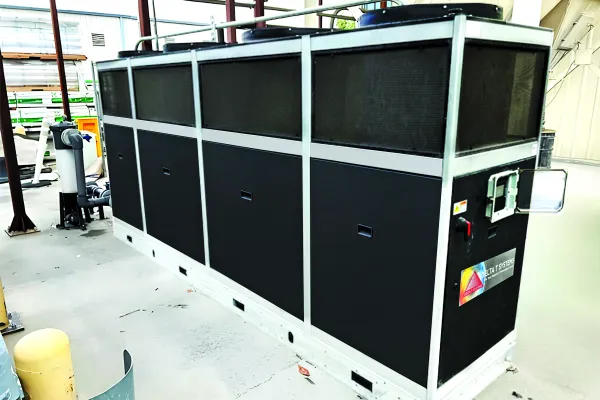
A building materials manufacturer solved persistent dust buildup by using a custom chiller designed to operate below the ambient dew point, intentionally creating condensation on process equipment. This case study shows how Delta T Systems integrated ambient dew point sensors and variable speed drive (VSD) technology to optimize chilled water temperature, reduce cleanup time, and improve energy efficiency. The solution delivered measurable maintenance savings and became a scalable model for process cooling and chiller optimization across multiple facilities.
HVAC systems can consume thirty percent (30%) of the total building energy needed in library, student union and classroom facilities. In laboratory and research facilities, the HVAC energy consumption can be up to sixty percent (60%). When one considers the data of traditional airside Energy Conservation Measures (ECMs), simple paybacks range from low-cost, quick paybacks to capital-intensive long paybacks. The ECMs range from simple strategies, such as night setback and/or supply air reset, to full air handler replacement or variable air volume from constant volume conversion. However, few ECMs deliver more than thirty-five percent (35%) savings for the entire university campus.
[ Read Full Story ]
Manufacturers are under continual pressure to control costs without affecting operations or worker comfort and safety. Because energy ranks as one of the largest operating expenses, improving energy efficiency of mechanical cooling systems is one of the best ways to reduce operating costs. In a typical water-cooled chiller plant, the chiller itself accounts for most of the energy consumption. That’s why improving chiller efficiency is critical to controlling operating costs.
[ Read Full Story ]
Hydronic balancing in industrial heating and cooling systems is an often overlooked final step in startup and commissioning of new and modified hydronic systems. Insisting on a complete system balance upon startup of a new or modified system is an inexpensive insurance policy for any design engineer or installation contractor to protect their reputation against a system that is not performing to design conditions. There are several methods of hydronic system balancing utilized in commercial and hospitality buildings, however, they are rarely found in the manufacturing and industrial environments.
[ Read Full Story ]
Chrysler’s Technology Center (CTC), located in Auburn Hills, MI, is home to some fourteen thousand employees responsible for keeping the automotive giant in motion. Completed in 1991, the complex is essentially a small city, encompassing 5.3 million square feet situated on over 500 acres. In addition to corporate offices, the facility houses a full laboratory level of various wind tunnels with thermal testing capabilities, a 1.8-mile evaluation road, a noise/vibration facility, an electromagnetic compatibility center, an environmental test center (able to create rain, snow and extreme temperatures), and a pilot production plant.
[ Read Full Story ]
Pepco Energy Services’ (PES) Midtown Thermal Control Center (MTCC) in Atlantic City, New Jersey, sells chilled water and steam to multiple Atlantic City casinos, Boardwalk Hall and Pier Shops. PES is also responsible for stand-alone remote heating and cooling plants for the Atlantic City’s major casino’s as well as the Atlantic City Convention Center including its 2.4 Mw solar array.
[ Read Full Story ]