
Heat Exchangers

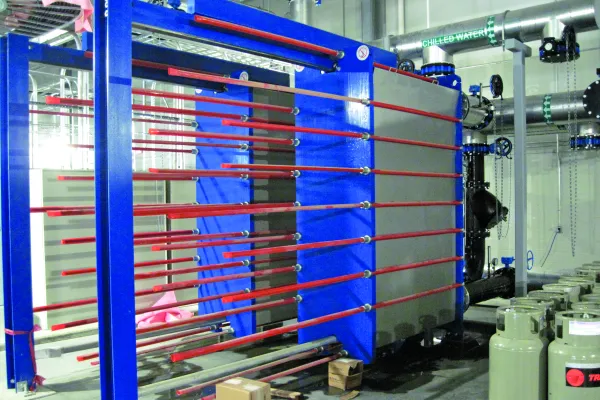
Free cooling offers a highly efficient alternative to chiller-based cooling, but its success depends on effective operation and control—especially during system transitions. This article outlines practical techniques for improving the shift between chiller and free cooling modes, minimizing temperature spikes and maintaining process stability in industrial environments. It also covers strategies for enhancing chiller performance under low-temperature conditions, optimizing heat exchanger startup, setting reliable control triggers and addressing maintenance and freeze protection. With proper tuning and operation, facilities can significantly increase free cooling hours, reduce energy use and extend chiller life without risking production disruptions.

When compressed air is generated, heat is inevitably produced as a by-product. Anyone looking to enhance efficiency can use this heat and increase the efficiency of compressors to about 95 percent as a result. To achieve this, there are easy-fit heat exchangers which can be fitted to existing air compressor stations. This investment often pays for itself within less than a year.  
There are six basic types of cooling systems that you can choose from to meet the cooling needs of your load. Each one has its strengths and weaknesses. This article was written to identify the different types of cooling systems and identify their strengths and weaknesses so that you can make an informed choice based on your needs.
Compressed air systems are present in almost all industrial processes and facilities. They have been correctly identified as an area of opportunity to reduce electrical (kW) energy costs through measures like reducing compressed air leaks and identifying artificial demand and inappropriate uses. Water-cooled air compressors can also be significant consumers of water and reducing these costs can represent a second area of opportunity.
Its simple physics that compressing air gives off heat. The heat energy is concentrated in the decreasing volume of air. To maintain proper operating temperatures, the compressor must transfer excess heat to a cooling media before the air goes out into the pipe system. As much as 90 percent of that heat can be recovered for use in your operation. If you can supplement or replace the electricity, gas or oil needed to create hot water for washrooms, or direct warm air into a workspace, warehouse, loading dock, or entryway, the savings can really add up.
It is widely recognized that compressed air systems account for ten percent of all electricity and roughly sixteen percent of U.S. industrial motor system energy use. Seventy percent of all manufacturing facilities in the United States use compressed air to drive a variety of process equipment.
Reducing energy costs and pollution emissions involves many areas within an industrial facility.  My studies have found key (or common) areas where low cost practical projects can be implemented.  Combined, these projects provide savings exceeding 10% of the annual energy spend with an average payback of less than one year.