How Adiabatic Cooling Systems Reduce Water Use, Lower Energy Costs and Improve Process Stability in Plastics Manufacturing
Across the plastics industry, cooling is one of the most essential – and costly – elements of production. Injection molding, blow molding, extrusion, thermoforming, compounding and PET processing all rely on precise temperature control to maintain cycle times, protect tooling and ensure consistent part quality. However, traditional cooling options have become increasingly difficult to justify in an era defined by sustainability goals, rising utility costs, increasing environmental regulations and the drive toward smarter, more efficient manufacturing.
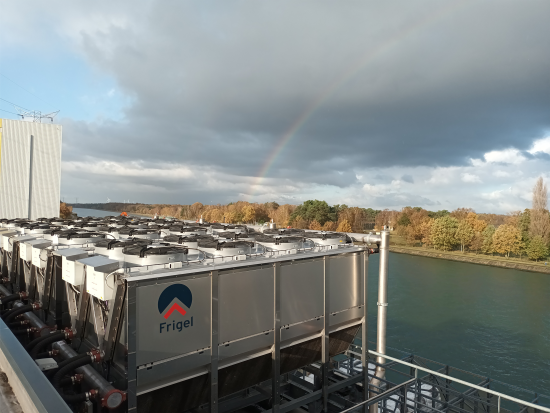
This self-draining adiabatic cooling system has eight fans per module. A total of 32 fans provide 480 tons of cooling capacity under normal conditions.
As a result, a technology once considered niche has emerged as a defining trend in process cooling: adiabatic coolers.
Typically overshadowed by traditional cooling methods with lower upfront pricing, adiabatic systems have grown in popularity thanks to major advancements in design, controls and performance. Today’s adiabatic solutions, especially those engineered specifically for industrial and plastics environments, offer a convincing combination of energy efficiency, water savings, process stability and dramatically lower total cost of ownership.
This article explores how adiabatic cooling works, how it compares to traditional technologies and why the shift toward adiabatic systems is accelerating across North American plastics processing.
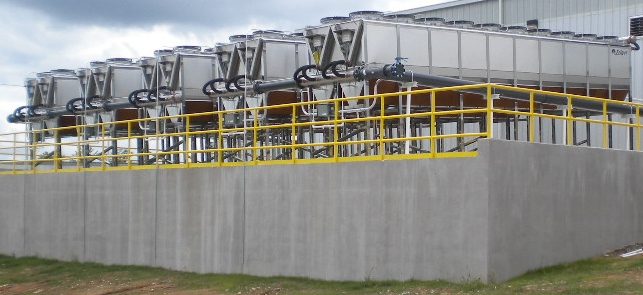
A self-draining adiabatic cooling system.
How Adiabatic Cooling Works: A Modern Application of a Basic Principle
Adiabatic cooling is based on a simple concept: As water evaporates, it absorbs heat, lowering the surrounding air temperature. But, unlike traditional evaporative cooling towers, where large volumes of water are constantly evaporated in an open system, adiabatic coolers use water only when necessary and in a controlled, closed-loop environment.
Premium technology adiabatic coolers are designed to keep the system process water (or water/glycol mixture) away from open air by employing varying designs of heat exchangers in combination with an adiabatic chamber, allowing the ambient air to be pre-cooled prior to reaching the heat exchanger. Air is pulled through the adiabatic chamber and across the heat exchangers using powerful, yet energy-efficient, variable-speed fans. If environmental conditions require additional cooling power, adiabatic coolers can spray non-process water on rugged cooling pads to assist in lowering the air temperature flowing over the heat exchanger. As the air flows over these now wet cooling pads, the water evaporates and the temperature of the air drops significantly, which increases cooling across the coils.
This flexibility in operating modes allows adiabatic coolers to run efficiently for utility savings while providing temperature control.
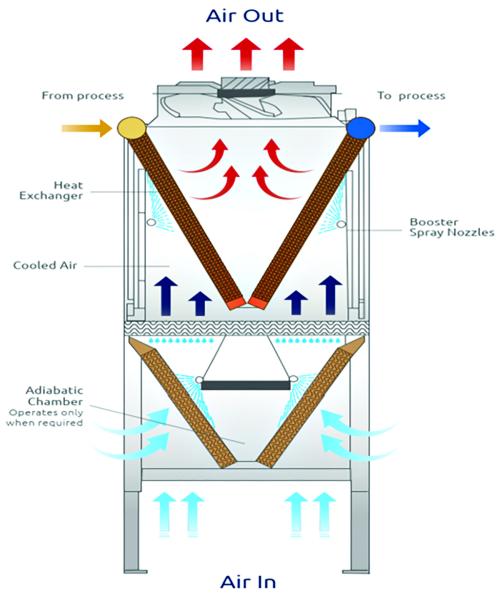
Airflow within an adiabatic cooler.
Another key characteristic not to be overlooked is the design of the heat-exchanging coils themselves. Depending on the system requirements, adiabatic coolers can be configured with their coils in a parallel or series design for the process water, which plays an important role in the system’s long-term success (refer to this note when choosing the right partner). Choosing the right coil design will depend upon a multitude of factors, including installation position/limitations, system sizing, ambient conditions and the process being cooled.
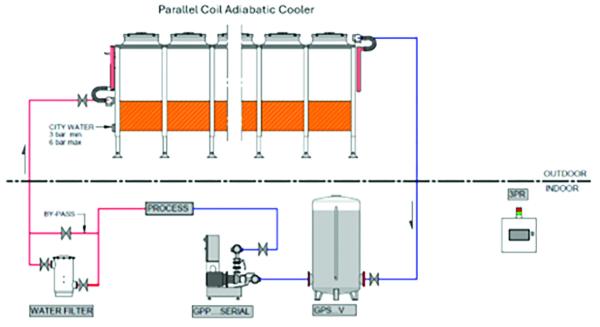
An adiabatic cooler with parallel coils.
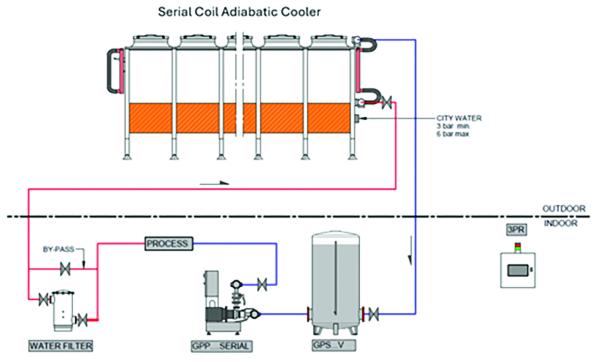
An adiabatic cooler with serial coils.
To prevent freezing in the harshest winter conditions, some top-of-the-line adiabatic coolers offer a self-drainable version integrated into the system, which automatically drains the cooler in the event of a system shutdown or power loss. This type of system can be critical in cold climates where a process cannot accept the use of glycol in the application.
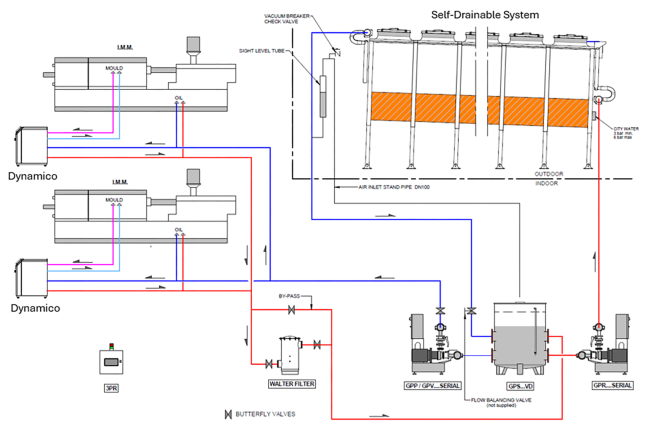
A self-draining adiabatic cooler.
Operating Modes: Performance and Savings
As designed, adiabatic coolers can operate in two basic modes, dry and adiabatic. These two modes are core functions of the adiabatic concept as described above.
Dry Mode. For a large part of the year, especially in northern U.S. and Canadian climates, the ambient temperature is low enough for the cooler to operate dry. Fans draw air across a bank of finned coils (heat exchangers), rejecting heat using only ambient air. This operation provides the best possible combination of low energy consumption, zero water use and minimal maintenance. This mode can be used in almost any climate depending on the load conditions, but frigid climates will provide a greater number of dry mode operational hours.
Adiabatic Mode. When ambient temperatures rise above a pre-determined setpoint, the system activates a fine mist to spray on cooling pads in front of the air stream of the coils. This action, in combination with the high velocity air flow across the cooling pad, allows water to evaporate before hitting the surface of the heat exchanger coil. This evaporative process drops the air temperature several degrees and helps maintain the correct approach temperature even in high-temperature climates or demanding applications. Because water is sprayed only when needed, and at a fine mist, the total consumption remains low and in a controlled state.
As an added benefit, when water is sprayed on cooling pads and not directly on the coils, the water can be totally evaporated, therefore preventing scale and buildup on the coil surface, which would lead to long-term performance degradation of the system.
Some adiabatic coolers can run in additional modes providing an even more effective operation for each system and environment, regardless of the season.
Free Cooling. In certain dry bulb ambient conditions and when used in conjunction with a properly optioned chiller system, the adiabatic cooler can run simply using Mother Nature to cool the process water. This results in the most efficient cooling and greatest savings possible, as the chiller’s refrigerant compressors work less. The adiabatic unit isn’t spraying water, so water savings increase, as well.
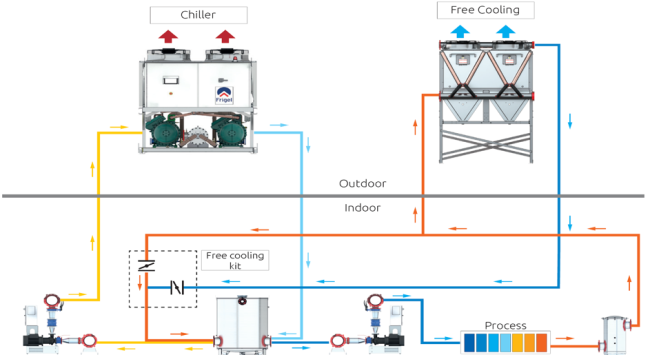
An example of a free cooling system.
Booster. In the most demanding conditions, some adiabatic coolers can spray additional water directly on the coils to boost cooling power via additional evaporation. While the benefits of not spraying directly on the coils were stated previously, sometimes it’s necessary when the cooling load is too great or the ambient operating conditions are too high. Having this booster function permits ultimate flexibility in adiabatic coolers for all operating environments and can be used only when needed to help offset utility consumption. For additional savings, the booster spray water can be collected and recirculated with certain control considerations.
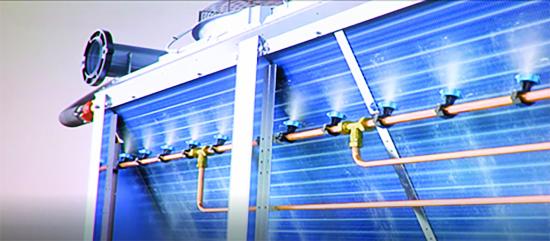
An adiabatic cooler with a spray booster.
The result is a customizable system providing the best of all worlds: the water and energy savings of free or dry cooling with the performance stability of evaporative or booster systems – without health, maintenance and regulatory burdens.
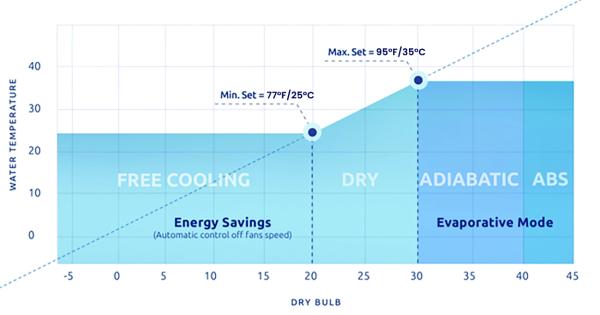
A comparison of working modes in an adiabatic cooler.
Adiabatic Cooling and Traditional Cooling Methods: A Practical Comparison
While traditional cooling methods have a lower upfront capex cost, the return on investment (ROI) can be easily calculated using actual process demands for the location. A simple model showing different operating environments and a comparison of usage for a 485 ton system could be:
Water and Energy. As shown, location plays an important role in the operating mode of the unit, determining total water requirements. Despite their varied use, adiabatic coolers can lower water needs by 90% in even the most demanding climates.
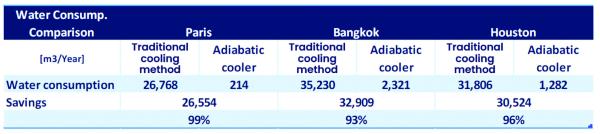
Water use comparisons for three cities.
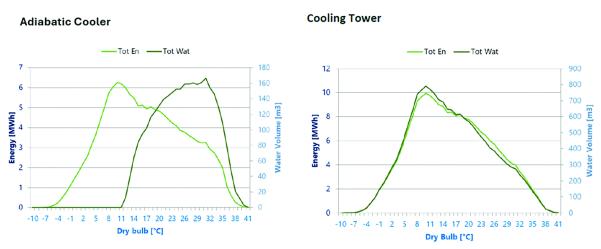
This side-by-side comparison shows an estimate for central California with both energy and water savings at almost 40%. Click to enlarge.
Total Cost of Ownership (15-20 years). Traditional cooling methods offer lower upfront costs, but can be costly to operate and maintain. Adiabatic systems come with higher upfront costs, but, if engineered properly, could provide a fast ROI.
When all factors are included – energy, water, labor, downtime – most plastics processors see 20-40% lower lifecycle costs with modern adiabatic solutions.
Lower Operating Costs. When considering the first pass at budgets, traditional cooling methods typically appear less expensive upfront, but hidden costs can be substantial including water usage and sewer costs, additional chemical treatment, maintenance costs for labor, cleaning, machine repair and downtime for poor machine performance.
Modern adiabatic coolers eliminate most of these costs and cut others dramatically. Many plastics processors see a 90-95% reduction in water use, up to a 30% reduction in energy use and a 50-80% reduction in maintenance labor.
Compliance with Sustainability and ESG Commitments. Water consumption is increasingly scrutinized in industrial facilities, especially where municipal costs are rising or allocation is restricted. A benefit of adiabatic systems is they only use water when necessary and only in small quantities. They produce no contaminated blowdown, require little chemical treatment and improve the energy efficiency of the cooling system through advanced fan control logic. For companies with environmental reporting requirements, adiabatic cooling represents an immediate, quantifiable improvement.
Closed-Loop Cooling. Biological growth, scaling and airborne contaminants all threaten process equipment and heat-transfer efficiency. This affects molds, chillers, TCUs and hydraulic systems. Adiabatic systems solve this problem by keeping the loop sealed. This ensures clean and reliable heat transfer with longer equipment life.
Adiabatic Cooling and Plastics Processing
Plastics processors require consistent cooling to maintain repeatable cycle times. The closed-loop design of adiabatic systems ensures stable temperatures regardless of outdoor environmental conditions by helping control scale, algae and other airborne debris buildup inside chillers, machine heat exchangers, molds and temperature control units. When buildup collects over time, all these pieces of equipment are more susceptible to failure or improper performance, which directly impacts the process cycle. This stability translates to lower scrap rates, faster cycles and improved uptime.
Injection Molding. Cycle time reduction is the primary source of profitability. Adiabatic cooling ensures consistent mold temperatures, reducing cycle time creep, scrap rates, chiller loads and downtime due to poor machine performance.
PET Processing. PET preform production is extremely temperature-sensitive, and cooling consistency is often the bottleneck. Adiabatic systems deliver precise, stable water temperatures, reduce cooling tower contamination and improve uptime in hot climates which allows PET preform production to remain in operation steadily.
Blow Molding. Adiabatic cooling improves bottle consistency and reduces variability between molds, particularly in high-speed lines.
Extrusion and Thermoforming. Water quality and consistency are critical. Adiabatic systems prevent contamination and scale, preserving heat-transfer performance throughout production.
Choosing the Right Partner for Adiabatic Solutions
While adiabatic cooling technology is not new, the system engineering matters. Systems designed for commercial HVAC often fall short in industrial applications. Choosing a partner whose technology is built specifically for heavy, high-duty process cooling, especially plastics processing, is critical.
Engineered for Industrial Load Conditions. Units should be designed to handle high fluid temperatures while managing variable yet demanding production loads. Adiabatic systems must integrate seamlessly with centralized chilling systems, operating efficiently year-round and able to tolerate harsh outdoor conditions.
A properly designed and installed adiabatic system is ideal for injection molding, PET processing, thermoforming and extrusion, where each day processing machines can be on or off depending on market conditions.
Smart, Adaptive Control. Control systems determine efficiency and regulate the operating mode based on real-time conditions. The control system should be integrated with the entire cooling system for maximum savings, so it can automatically control adiabatic spray water when needed, modulate fans for energy efficiency and provide continuous monitoring to ensure setpoint accuracy. With a smart and adaptive control system, plants can get cooling capacity on demand without wasting water or energy.
Integration with Complete Systems. Adiabatic coolers can be integrated with an existing cooling system, offering a unique environment for process cooling. Adding adiabatic coolers to an existing cooling system increases operational efficiency using the operating modes previously covered and maximizing the performance of centralized chillers, mold temperature control units, pumping stations, high-performance filtration and smart monitoring. Adiabatic coolers serve as a backbone for a fully integrated, optimized cooling solution tailored to each facility’s needs.
Adiabatic Systems and the Future of Process Cooling
The plastics industry is moving toward smarter, cleaner and more efficient cooling solutions supporting modern production demands and sustainability expectations. Adiabatic systems offer high performance in all climates, water savings, cleaner and safer operations, lower total cost of ownership, better process consistency and reduced environmental footprint.
For these reasons, adiabatic cooling is becoming the preferred solution not just for new facilities, but also for retrofits where manufacturers seek to replace aging cooling systems.
Conclusion
Cooling is an often-overlooked system in the plastics processing industry, and the systems chosen today will influence energy consumption, water use, reliability and overall profitability for decades to come. Adiabatic coolers have evolved into a high-performance, sustainable alternative addressing the specific needs of plastics processors better than traditional technologies.
For manufacturers seeking stability, sustainability and long-term cost reduction, adiabatic cooling is no longer just an option. It is rapidly becoming the industry benchmark for the next generation of high-performance plastics manufacturing.
About the Author

Eric Thompson is a General Manager at Frigel North America, with over 20 years in the plastics industry working with extrusion and injection molding processes, injection machinery and cooling technology.
About Frigel North America
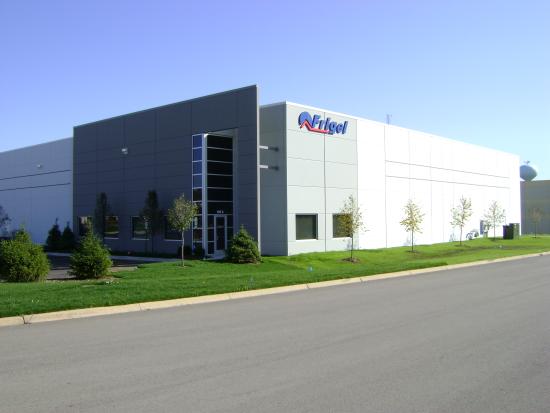
Frigel North America headquarters in East Dundee, IL.
Frigel is a leading global manufacturer of intelligent process cooling equipment and systems with corporate headquarters in Florence, Italy, and facilities worldwide. Frigel North America, established in 2006, is located in the Chicago area and is responsible for sales, engineering, service and parts for the entire North American market. For more information, visit https://www.frigel.com.
To read articles about Dry Coolers, visit https://coolingbestpractices.com/technology/dry-coolers.
Visit our Webinar Archives to listen to expert presentations on Dry Coolers at https://coolingbestpractices.com/magazine/webinars.