Why Pump System Assessments Are Critical for Energy Efficiency, Reliability and Cost Savings
Pumping systems are foundational to nearly every industrial, commercial and municipal facility. They move water, wastewater, process fluids, chilled and heated media and other liquids that enable critical operations – from manufacturing and chemical processing to HVAC circulation, potable water distribution and fire protection. Despite their importance, these systems often operate in the background, attracting attention only when something goes wrong. As a result, inefficiencies, excessive energy use and avoidable failures can persist for years. In an era of rising energy costs, tight operating budgets and ambitious sustainability goals, this is no longer acceptable. Facilities hoping to remain competitive and resilient must look closely at the performance of their pumping systems.
Assessing pump systems regularly is a valuable investment for any pump professional, facility engineer or building owner. A thorough pump system assessment provides insight into how efficiently the pump system uses energy, how reliably it operates, how well it meets process requirements and where there are opportunities to improve. Unlike a quick inspection or a routine maintenance checklist, a pump system assessment is a structured, data-driven process examining the entire pumping system, from the pump and motor to the controls, piping, valves and instrumentation. The outcome is not only a list of problems, but also a roadmap for optimization delivering measurable savings and long-term performance gains.
The scale of opportunity is significant. Pumping systems are estimated to account for more than 40% of industrial energy use, making them one of the largest categories of energy consumption in many plants. In commercial buildings, pumps drive heating and cooling systems, chilled water loops, condenser water circuits, domestic water boosting, fire suppression and wastewater handling, often consuming more than 35% of a building’s total energy. When these systems are not optimized, the extra energy consumption translates directly into higher operating costs. At the same time, energy and maintenance together typically make up around 65% of the total cost of ownership of a medium-sized industrial pumping system. That means the majority of lifecycle costs occur after installation, not at the point of purchase. This reality underscores why it is so important to evaluate systems in operation, not just select efficient equipment on paper.
Fixing Pump System Inefficiencies Requires a Holistic Approach
Many of the issues that limit pumping system performance are subtle and slow-moving. A system may have been designed for conditions that no longer exist, such as higher production volumes, different process demands or older building occupancy patterns. Over time, the actual duty point shifts, but the pumps and controls are never adjusted to match. In other cases, pumps may have been deliberately oversized during design, with the intention of providing an extra margin of safety. While the intent is understandable, oversizing often forces pumps to operate far from their best efficiency point, leading to throttled valves, excessive recirculation, higher vibration levels and increased heat generation. Operators may not notice these issues day to day, because the system works, but the hidden costs accumulate in the form of wasted energy and premature wear.
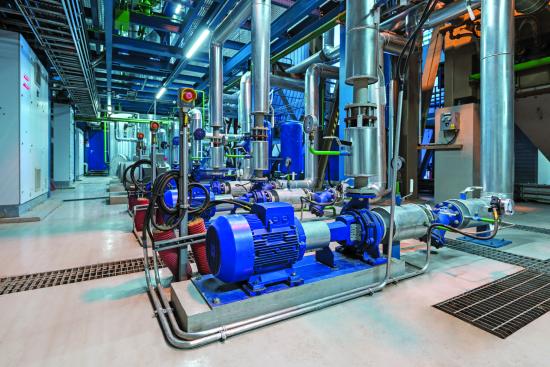
To address underlying system issues, a pump system assessment looks at the system as a whole, rather than treating each component in isolation.
Common inefficiencies in pump systems fall into several categories. Oversizing is one. Another is the use of outdated or inappropriate control strategies. Many pump systems employ constant-speed pumps with throttling valves to control flow. When demand decreases, a valve is partially closed to create artificial resistance, causing the pump to work harder just to overcome its own imposed restriction. This wastes considerable energy compared to a properly applied variable speed drive (VSD) that adjusts pump speed to match system demand. Poor system design can also contribute: Long, convoluted piping runs, unnecessary elbows or fittings, undersized pipes and poorly located valves all increase friction losses. Inadequate or malfunctioning instrumentation can mask these problems by providing incomplete or inaccurate feedback to operators. Maintenance practices focusing solely on repairing visible failures rather than addressing underlying system issues further perpetuate inefficiencies.
Because these problems are often interconnected, fixing them requires a holistic approach. A pump system assessment looks at the system as a whole rather than treating each component in isolation. The assessment process considers how pumps interact with each other and with the system curve, how control logic responds to changing loads, how frequently pumps start and stop, what operating points are most common and where system resistance could be reduced. This broader view makes it possible to identify root causes rather than simply addressing symptoms. For example, a recurring seal failure may be caused not just by a faulty seal design but also by chronic cavitation resulting from a poorly designed suction line. A pump system assessment allows an organization to uncover those deeper issues and correct them in a way that improves reliability as well as efficiency.
The value proposition of pump system assessments can be summarized in three main dimensions: energy savings, reliability improvement and operational performance. On the energy side, assessments routinely uncover opportunities to reduce power consumption by 20-50%, depending on the type of system and its baseline condition. In some extreme cases – particularly in older facilities or poorly designed systems – the savings can be even higher. Even at the lower end of that range, the financial impact can be substantial when pumps run many hours per year. Because energy is a recurring operating expense, reducing it yields benefits year after year. On the reliability side, operating pumps closer to their best efficiency point and reducing cavitation, vibration and heat reduces wear on bearings, seals and impellers. This translates into fewer failures, less downtime and lower maintenance costs. Operationally, optimized systems typically provide more stable flow and pressure, which improves process control, product quality and occupant comfort in buildings.
Municipal Pumping Station Improvements Save $50,000 Annually
To understand just how powerful assessments can be, it is useful to look at specific examples. One instructive case comes from a municipal water pumping station where a pump system assessment professional (PSAP) led a detailed evaluation after one of several vertical turbine pumps failed catastrophically due to cavitation. The assessment included wire-to-water efficiency testing for the remaining pumps, measuring the actual performance from the electrical input to the hydraulic output. The results were eye-opening: Several pumps were operating with efficiencies in the range of 40-60%, well below what would be expected for properly selected and maintained equipment. One pump retrofitted with a VSD was effectively contributing no useful work at all under the way the system was operated, yielding near-zero effective efficiency.
Rather than simply replacing the failed pump in kind, the assessment team examined how the entire station was controlled and how the pumps were staged. They discovered by adjusting the staging order and control logic – essentially ensuring the most efficient pumps handled the majority of the load – they could improve overall system efficiency without major capital expenditures. This change alone was estimated to save around $12,000 per year in energy costs. Building on that success, the team recommended replacing the least efficient existing pump and the failed pump with two new, properly sized and more efficient units. These new pumps were able to deliver roughly 30% more flow while consuming approximately 10% less energy than the units they replaced. When energy savings and available utility incentives were taken into account, the project was projected to save nearly $50,000 annually, with a payback of around four years. At the same time, the station’s reliability and resilience were dramatically improved.
This single example illustrates several important points. First, it shows that meaningful improvements often come from a combination of operational changes and targeted equipment upgrades. Second, it demonstrates the importance of system-level thinking: If the team had focused only on the failed pump, it could easily have missed the opportunity to optimize staging and address broader inefficiencies. Third, it highlights the added value of PSAP-certified professionals, who bring specialized expertise in pump system assessment, energy analysis and optimization strategies. Finally, it underscores that the gains from assessments are not limited to energy savings; improved reliability, reduced maintenance needs and better service to customers or building occupants are equally important results.
How to Carry Out a Pump System Assessment
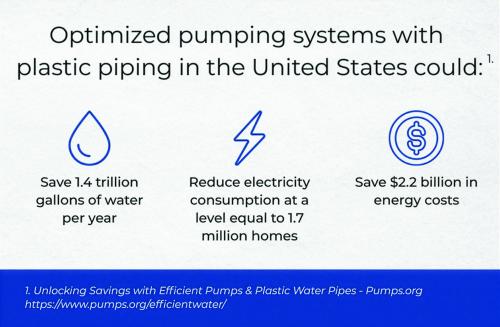
Large-scale studies confirm the cumulative potential of pump system optimization is enormous. Research sponsored by the Hydraulic Institute has shown in water and wastewater systems across the United States, optimized pumping configurations could save billions of dollars in energy costs each year. By combining more efficient pumps, VSDs, improved piping design and modern control strategies, water utilities could reduce power consumption enough to significantly lower operational budgets while also cutting greenhouse gas emissions. One study estimated widespread adoption of best practices could save on the order of $2.2 billion annually and reduce pumping-related energy use to a degree equivalent to the consumption of more than one million homes. Additionally, by minimizing leakage and reducing friction losses, these improvements can save vast quantities of water that would otherwise be wasted in distribution systems.
Although municipal and utility systems often present the biggest numerical savings because of their scale, similar principles apply in industrial and commercial facilities. In a manufacturing plant, for instance, a system assessment might reveal process pumps are substantially oversized and operating against mostly closed valves. By replacing these pumps with smaller units or installing VSDs, the plant can reduce energy costs, minimize stress on equipment and improve control of flows and pressures throughout the process. In a high-rise office building, an assessment might identify chilled water pumps running at constant speed year-round, even when building loads are low. Converting these pumps to variable speed operation and implementing demand-based control can cut energy use dramatically, while also improving occupant comfort and reducing noise and vibration in mechanical rooms.
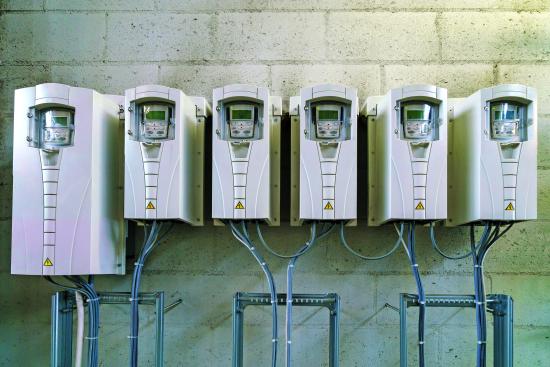
In a high-rise building, converting chilled water pumps to variable speed operation and implementing demand-based control can cut energy use while improving occupant comfort.
To carry out a pump system assessment effectively, facilities should follow a structured methodology. The Hydraulic Institute describes a process that typically includes pre-screening, data collection, analysis, reporting, implementation of improvements and measurement and verification. Pre-screening is particularly important in large plants with many pumps, because it is not practical or cost-effective to conduct in-depth assessments of every system. During pre-screening, assessors gather basic information such as pump descriptions, motor sizes, annual operating hours, control methods, maintenance histories, reported problems and any available instrumentation data. This information is used to identify systems with high energy use, frequent failures or known performance problems – prime candidates for a more detailed assessment.
Once priority systems have been identified, the facility assembles an assessment team. This team typically includes operations personnel who understand how the systems are run day to day, maintenance staff who are familiar with equipment histories and common failure modes, engineers who know the design intent and process requirements and, ideally, a PSAP-certified professional who can lead the technical assessment. Controls specialists, such as building automation or SCADA engineers, also play an important role when pump operation is closely tied to automation systems. Successful assessments depend on open communication among these stakeholders. Operations staff provide practical insights into how systems behave under different conditions, while engineers and assessors interpret those observations in the context of hydraulic and energy performance.

Assessment teams include operations and maintenance staff who are familiar with the pump systems and how they are run, engineers who know the design intent and, ideally, a PSAP-certified professional.
The data collection phase is where the assessment moves from theory to measurement. Assessors may temporarily install flow meters, pressure transducers, power analyzers and data loggers to capture how the pump system operates over time. In some cases, existing instrumentation can be leveraged to collect trends without additional hardware. Measurements might include suction and discharge pressures, flow rates, pump and motor input power, fluid temperatures and system operating states. For variable speed systems, data should capture behavior across a range of speeds and load conditions. In addition to electrical and hydraulic measurements, assessors often perform vibration analysis and check alignment, balance and other mechanical factors influencing reliability.
Analyzing the Results of a Pump System Assessment
With the data in hand, the analysis phase begins. Assessors compare measured pump performance to manufacturer curves, identify where pumps operate relative to their best efficiency points and determine how much energy is being used to deliver a given amount of fluid. They construct system curves to understand how piping and valves influence operating points and examine control logic to see how pumps respond to changes in demand. Patterns often emerge: Pumps may spend most of their time operating at a fraction of their rated flow, or they may cycle on and off frequently due to control setpoints that are too narrow. Throttling losses may be apparent in significant pressure drops across control valves. In multi-pump systems, staging logic may cause pumps to operate in regions where none of them are efficient. The goal of the analysis is to identify where the largest improvements can be made with the least disruption and cost.
The assessment culminates in a comprehensive report. This document should clearly describe the baseline condition of the pump system, including energy use, operating characteristics and reliability issues. It should then present a series of recommended improvements, each accompanied by an estimate of energy savings, maintenance savings and implementation cost. Common recommendations include installing VSDs, resizing impellers, replacing pumps with more efficient models, modifying piping to reduce unnecessary restrictions, upgrading or adding instrumentation and revising control strategies. To help decision-makers prioritize actions, the report should rank opportunities by payback period or net present value and distinguish between low-cost operational changes and capital projects that require more planning and investment.
Of course, the real value of a pump system assessment is only realized when recommendations are implemented. Facilities viewing the assessment as a one-time exercise and leaving the report on the shelf miss out on its full potential. Implementation may be phased over time, focusing first on no-cost and low-cost measures such as reprogramming controls, adjusting setpoints or changing pump staging. These early wins can generate savings that help fund more substantial improvements, such as pump replacements or major piping modifications. Throughout implementation, it is important to keep stakeholders informed and involved; when operators understand why changes are being made and see the results, they are more likely to support and sustain new practices.
Measurement and verification close the loop. By repeating key measurements after improvements are installed – such as input power at given flow rates, system pressures and pump operating points – facilities can confirm the expected savings have been achieved. Measurement and verification also help detect unintended consequences of changes, allowing fine-tuning to ensure optimal performance. Documented savings can support internal justification for future projects and may be required to secure utility rebates or incentives. Over time, facilities can build a track record of successful optimization projects, strengthening the business case for continued investment in energy efficiency and reliability initiatives.
Pump System Professionals Put Assessments into Action
Within this framework, the role of a pump system optimization advocate is invaluable. This internal champion, often a senior engineer or energy manager, is responsible for keeping pump system performance on the organization’s agenda. The advocate identifies candidate systems for assessment, secures funding and management buy-in, coordinates with external experts and tracks progress over time. Without such leadership, assessments risk becoming isolated events rather than part of a continuous improvement strategy. The advocate can also help integrate pump system optimization into broader initiatives such as ISO 50001 energy management systems, corporate sustainability programs and asset management frameworks.
PSAPs complement this internal leadership by providing depth of technical expertise. PSAP certification, offered by the Hydraulic Institute, verifies an individual has demonstrated knowledge and experience in areas such as hydraulic principles, pump and system interaction, energy analysis and assessment methodologies. PSAPs understand not only how to evaluate a system, but also how to communicate findings effectively to diverse stakeholders, from technicians on the plant floor to executives in the boardroom. For organizations, working with PSAP-certified professionals reduces the risk of incorrect diagnoses or misguided investments and increases confidence that projects will deliver their promised benefits.
In summary, pump system assessments matter because they reveal what is otherwise hidden. They make the invisible visible by quantifying how much energy is being consumed, where it is being wasted and how reliability and performance can be improved. They turn intuition and anecdote into data and analysis. Most importantly, they provide a structured path toward optimization that aligns technical improvements with financial and operational goals. For pump professionals, facility managers, building owners and utility leaders alike, embracing pump system assessments is a practical and powerful way to achieve cost savings, reduce risk and support long-term sustainability.

By quantifying energy consumption and performance issues, pump system assessments reveal hidden opportunities for cost savings.
There is an important workforce and knowledge dimension to pump system assessments. Many facilities face the simultaneous challenges of an aging workforce and increasingly complex systems. As experienced operators and engineers retire, they take with them invaluable institutional knowledge about how pump systems behave and how problems have been solved in the past. Formalizing pump system assessment practices and training new professionals, including those pursuing PSAP certification, helps bridge this gap. It ensures system understanding is not solely dependent on a few individuals, but is embedded in documented procedures, data and analysis. This institutionalization of knowledge supports continuity and resilience, even as personnel change over time.
Pump system assessments are about making informed decisions. In the absence of data, it is easy to assume systems are good enough or that upgrading them would be too costly or disruptive. Assessments replace assumptions with evidence. They highlight which systems perform well and which fall short. They quantify the trade-offs between leaving a system as-is and investing in improvements. They provide the technical and financial justification managers need to allocate resources wisely. In this way, assessments help reconcile competing priorities: energy efficiency and reliability, short-term budgets and long-term savings, operational demands and sustainability goals.
Regardless of the size or type of facility, pump system assessments offer a practical, proven way to unlock significant value. They reveal hidden inefficiencies, reduce operating costs and enhance reliability. They support environmental and regulatory compliance. They strengthen organizational knowledge and capability. Most importantly, they turn the abstract goal of optimization into a concrete, achievable process grounded in data and engineering soundness. Facilities embracing this process position themselves not only to save money today, but to thrive in a future where efficient, reliable and sustainable operation is more important than ever.
About the Author

Matthew Derner is the Senior Manager of Education for the Hydraulic Institute.
About the Hydraulic Institute
Founded in 1917, the Hydraulic Institute is the largest association of pump manufacturers in North America. As the global authority on pumps and pump systems, it develops standards and technical resources including application guidebooks, online tools and calculators. For more information, visit https://www.pumps.org.
To read articles about Energy Management, visit https://coolingbestpractices.com/energy-manager.
Visit our Webinar Archives to listen to expert presentations on Energy Management at https://coolingbestpractices.com/magazine/webinars.