
Chiller & Cooling Best Practices Magazine interviewed Keith Earhart is Senior Vice President, Engineered Sales and Strategic Accounts, for CIS
In April 2025, we presented an interview with CIS Industries, a supplier of industrial and commercial HVAC solutions and technologies based in New Orleans, LA, that detailed how the engineering firm helps central utility plants withstand extreme weather events, such as hurricanes. Our interview uncovered so much valuable information we decided to create a second part. Keith Earhart is Senior Vice President, Engineered Sales and Strategic Accounts, for CIS.
Chiller & Cooling Best Practices Magazine: What are some of the most common water conservation projects for industrial applications you encounter with water-cooled or air-cooled chillers?
Keith Earhart: That depends on whether we’re trying to conserve water because we can't get enough to the site or because it's expensive. We have a couple of approaches. If we can increase the cycles of concentration on a cooling tower, we're blowing less water down. To do that, we have to have a good handle on what's going on in the tower, from proper water treatment to ideally filtered and treated makeup water. We're not just taking well water and dumping it in there. We're potentially running it through a reverse osmosis generator or using nano filtration or we’re using a separator.
Once we evaporate water, we're left with a certain amount of solids. How do we get them out? Do we blow them down or do we provide a sweeper system that concentrates the amount of particles into a separator and blows that down, therefore increasing our cycles of concentration?
Or do we look at a hybrid adiabatic approach where, at certain times of the year, we can turn off the evaporative portion and run on a pure dry coil? Water conservation becomes tricky depending on the area and the demand to the site.
If we're trying to save energy, what is the most cost-effective solution? Do we want to spend $90,000 on a reverse osmosis system, or do we want to spend $20,000 on a separator that gets us close enough for this scenario? Often, it's a combination of the two.

Keith Earhart, Senior Vice President, Engineered Sales and Strategic Accounts.
Chiller & Cooling Best Practices Magazine: We have a longtime reader who is responsible for 10 major manufacturing plants. He said, "We're evaporating four million gallons a day just in this plant. Any advice?" I told him, "I know you need to look at makeup water." You just touched on that. Any other things you would say to him, because he'll read this?
Keith Earhart: Certainly. In addition to the makeup water, the cycles of concentration and the basin sweepers and separators – which are all good things – chances are he's changed his towers’ fill more than a few times.
Often, we'll see RFPs go out saying, “Change the fill in my cooling tower.” Nothing more associated with it. One of our larger customers came to us to advise on the fill for a light industrial cooling tower. When they replaced the fill previously, they left out specifications on the exact peripheries. In fact, they even left out new requirements for drift eliminators overall. You go to this beautiful little campus next to an iconic stadium, and you see drift from this tower billowing out over the whole campus because somebody wanted to save a few dollars, or it wasn't clearly specified.
I would focus on getting quality components for that fill and making sure your specifications are tight to get exactly what you want with a specifiable drift rate, specifiable performance, specifiable thickness and wind loading associated with that.
It's common that in a fill change, if the customer says, “Give me the best price,” they'll go in there with chainsaws and cut out all the fill hangers and the fill, then throw in block fill. Block fill sits on the floor and offers much lower performance. It becomes a nightmare from a cleaning perspective. All the mud just sits on the bottom of this fill and the bottom of the cooling tower. That's not what you envisioned when you spent your money on a fill change, especially with a big light industrial cooling tower. Now, you've taken this high-performance machine and you've put a bottom-line engine in it. Is it an engine? Yeah. Does it work? Yeah. Does it work like it's supposed to? No.
Chiller & Cooling Best Practices Magazine: How much impact do quality drift eliminators and fill have on water consumption?
Keith Earhart: Drift is completely wasted water and energy. The water lost serves little to no useful purpose. High-performance drift eliminators boast drift rates of .001% down to .0005%. That’s an exponential difference in water conserved when compared to the original drift rates of some large industrial towers that shipped with .01%. In general, the fill and drift eliminators are interesting because you pay for them twice. If you use lower-performance fill, your net result might be one degree more of approach on that cooling curve, resulting in one degree hotter condenser water. You have to pay for that twice. You're running hotter water overall, your fans are working harder to get there, but now your chillers have to use significantly more energy to the tune of 11-12% for one degree of approach. Now you're rejecting more heat, burning more energy and have overall higher heat rejection, which means you have higher evaporation.
Chiller & Cooling Best Practices Magazine: It's like having a bad heat exchanger.
Keith Earhart: Exactly. You have to work that much harder to do the same amount of work. Now we have this massive lift, and we really have no need for that. It can make a significant difference overall. Back-of-the-envelope math says every degree of tower water approach is about 11-12% capacity, with the energy usage rising to the cube. That can be significant overall water usage. I would focus on what you're putting back in these towers. Make sure it's OEM grade. Believe me, that matters.
One other thing that can save water is a heat pump chiller. Manufacturers have been putting these out since the 1970s and the oil crisis. They’re not recent. While certain parts of the country have embraced them in large central plant loops, other parts of the country have pushed back based on previous experiences with poor designs and maintenance plans. We've done a lot of them, and the key to success is to keep them simple. Run it and size it like a boiler that also happens to make free chilled water.
Imagine if, instead of rejecting the heat from the chillers to the cooling tower, I then redirect it for, say, a hospital, and I use it as useful heat at 140°F (60°C) in my process. That's that much less water I'm evaporating. That's also that much less energy I'm using. I'm not paying for it twice. I'm putting chilled water over here and I'm putting hot water over there exactly where it needs to go. That has led to significant financial as well as environmental savings for a lot of our customers. In fact, nearly all of our energy-to-service and energy-saving projects have a heat pump chiller at their core. The ROI is significant.
Chiller & Cooling Best Practices Magazine: I've never thought of a heat pump chiller as a technique to reduce water consumption in a cooling tower. It makes sense.
Keith Earhart: If we don't have to reject it, that's more water savings overall. Of course, we have the added benefit of creating hot water for about half the price. Obviously, natural gas is cheaper per kilowatt than energy, but when we're running a heat pump chiller, we're running on the heating side alone, running a coefficient of performance (COP) of four, which means we're making hot water for half the cost. By the way, you have all that 40-42°F (4-6°C) water on your chilled water side that you're getting for free, as well. The actual integrated COP is significant and it's a win-win. We were on the voting committee for energy codes in Louisiana. We made it known that we have fully embraced heat pump chillers in all our sites.
If you don't want to do an air-side economizer and water-side economizer, a heat pump chiller for a hospital application can be a good approach. Not only that, but we've actually made it code-mandated on hospital facilities over a certain size that you'll have 7% of your capacity come from a heat pump chiller.
Chiller & Cooling Best Practices Magazine: It's like they're trim units in a way?
Keith Earhart: Yes. Basically, they respond like another stage of the boiler, ideally the first stage of the boiler. First on, last off. If you need additional hot water, you bring another boiler on. If you need additional chilled water, you bring an additional chiller on. You produce as much chilled water as you can, but you respond to the hot water demand load.
ASHRAE Guideline 36 is a high-performance sequence of operations that ASHRAE sponsors. Automatic Logic Corporation (ALC), a Carrier subsidiary, was involved, along with Taylor Engineering. We've developed a high-performance sequence of operations, not just from the air handler perspective, but from the central plant perspective. It’s exactly what you're describing: how to bring these chillers on, how to not have it where we're not meeting set point for five minutes, then bringing another chiller on. That means you had one chiller running 100% when you could have easily brought another one on when you hit 80%. If you dig into some of that, it's been pretty good for us. We've implemented it across multiple campuses with great success, because it provides standardized sequences of operations that manufacturers have to certify they’re going to hit. You can have a mixture: We can have a constant speed centrifugal chiller that hasn't been replaced. Maybe it’s used as a backup. We can have a positive displacement chiller. We can have VFD centrifugal chillers. Based on that combination, we're going to create a grid saying this is how we sequence everything to optimize it. It’s based on our need for a set amount of chilled water, differential pressure or cold temperature.
Chiller & Cooling Best Practices Magazine: Can you describe ASHRAE Guideline 36? What is it and how do you deploy it?
Keith Earhart: ASHRAE Guideline 36 is basically a high-performance sequence of operations for large buildings, such as large manufacturing plants, hospitals and hotels. The core concept is to have our load dictate what we do, not the other way around. If the process can handle X amount of chilled water temperature, then we will reset to that. If an air-cooled/distribution process like an AHU can handle X amount of differential pressure, then we'll reset down to that point accordingly. We let the load dictate to the plant. From there, based on your need for 20,000 tons of chilled water at this degree and wet bulb temperature, how do we achieve this? The concept is that we have a standard set of sequences that all manufacturers can code, and ASHRAE has the guideline. All manufacturers will go back and say, “We have tested to this guideline, and we certify these programs comply.” It takes the burden off the engineer and puts it on the manufacturer.
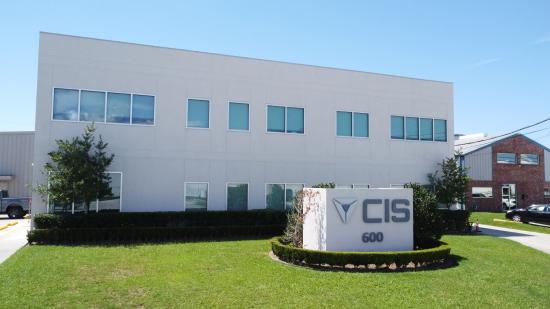
CIS Industries headquarters in New Orleans, LA.
For more information on CIS Industries, visit https://cisindustries.com.
To read similar Chiller Technology articles, visit https://coolingbestpractices.com/technology/chillers.
Visit our Webinar Archives to listen to expert presentations on Chiller Technology at https://coolingbestpractices.com/magazine/webinars.