The 2026 Cooling Technology Institute (CTI) Annual Conference for manufacturers, owner-operators and suppliers of heat rejection equipment was held Feb. 8-11, 2026, at the Westin Galleria in Houston, TX. This show report shares updates to CTI standards and acceptance test codes, synopsizes the event’s educational curriculum, shares perspectives and highlights firms attending this year’s conference. Due to space constraints, not all exhibitors, authors and presenters could be included.
CTI Leadership Updates
At the conference luncheon, outgoing CTI President Jim Baker introduced incoming CTI President Ian Horne, Water Technology Specialist, Airgas, to kick off his 2026-2028 term.
“Without the people in this room, I would never have been successful in my job. It’s my intent to honor the founding members who have been pillars of CTI. I’d like to thank Jim Baker, who has served as a delegate of CTI for 44 years,” said Horne.
The cabinet members now include Vice President Nick Macarenas (Baltimore Aircoil), Treasurer Brandon Rees (Cooling Tower Depot) and Secretary Mark Williams (Walter P. Moore). Outgoing CTI Board of Directors members Billy Childers (Aggreko) and Miguel Gutierrez (Albemarle) were thanked by the collective.
Members newly appointed to the Board of Directors include Kimberly Ashcraft with Arizona Public Services, David Staat with OBR Cooling Towers and Bob Hendel with Veolia Water Technologies.
Educational Seminar & Technical Papers
The Educational Seminar, chaired by Frank Morrison, Technical Director, Global Marketing, Baltimore Aircoil, focused on heat rejection for “new economy markets” including semiconductor manufacturing, data centers, battery energy storage systems, hydrogen electrolysis and co-located power generation facilities.
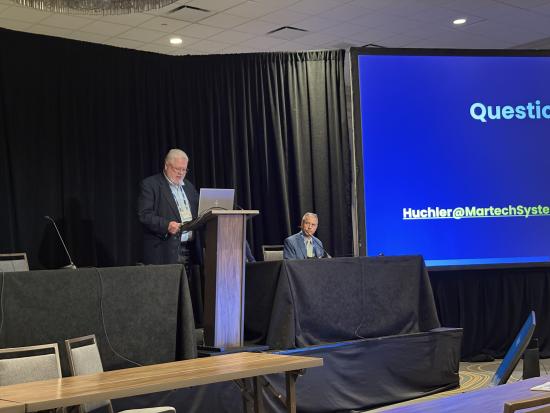
Frank Morrison with Baltimore Aircoil, concluding the 2026 conference program.
The seminar brought awareness to an updated standard (ASCE 74-23) from the American Society of Civil Engineers that may classify an FRP field-erected cooling tower as a building, not equipment, threatening substantially increased costs. According to presenters, cooling tower knowledge provided to the ASCE committee by CTI was not used. CTI’s FRP documentation can be found in STD-137, ESG-152, Chapter 9 and 13, TP-137 and a guideline in development called ESG 175.
The full Educational Seminar agenda featured:
- Cooling the New Economy: Strategies for Hydrogen, Energy Storage, AI Infrastructure & More by Mihir Kalyani, EVAPCO
- Sustainable Cooling of Mega Facilities by Stephen Kline and Jan Tysebaert, Baltimore Aircoil
- Benefits of FRP Construction for New Economy Facilities by Rebecca Schwab, Cooling Tower Depot; Joe Gende, Kelvion; Kevin Leon-Tang, International Cooling Tower, and Dan Reith, EvapTech
- Water Treatment Challenges with Direct-to-Chip Thermal Management in Data Centers by Pete Elliott, ChemTreat, and Loraine Huchler P.E., CEM., MarTech Systems
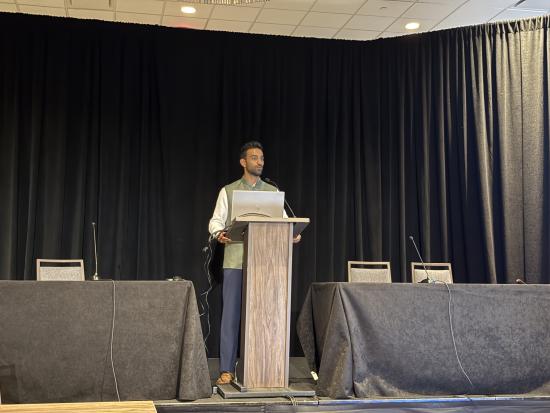
“Carbon capture, nuclear power, exponentially growing AI capabilities, grid modernization and electrification are facilitating rapid technological innovation and development,” said Mihir Kalyani, EVAPCO.
The conference featured around 30 technical paper presentations, an owner/operator session, a water treatment panel discussion and the longstanding ask-the-expert seminar.
“I learned a lot from both David Staat’s presentation, Post-Failure Evaluation of Wood-to-FRP Conversion of a Crossflow Cooling Tower, and Tom Kline’s presentation, Protective Surface Coating & Lining for Reinforced Concrete Cooling Tower,” said Brady Kratzer, Baytown Area Cooling Tower First Line Supervisor, ExxonMobil. Kratzer’s colleague Cameron Gore, FECC Inspection FLS and RECON Team Officer, said he learned from Joe Gende at Kelvion during Field Erected Stainless Steel Towers.
Codes and Standards Updates
CTI’s three standing committees – Engineering, Standards & Maintenance (ESM); Performance & Technology (P&T) and Water Treatment (WT) – gather at the conference to review, draft and update CTI’s existing and developing acceptance test codes (ATC) and standards (STD) covering thermal performance, sound, drift, water treatment, materials, plume abatement, vibration and fire resistance. Committee chairpersons include Jamie Bland with Composite Cooling Solutions for ESM, Scott Nevins with EVAPCO for P&T, and Loraine Huchler with MarTech Systems for WT.
CTI announced its new Sound Certification program (STD-204), so operators have assurance heat rejection devices will comply with manufacturers’ published sound ratings. To be eligible for sound certification, the equipment must first be thermal performance-certified per STD-201. The Sound Measurement Test Code ATC-128 was updated with measurement methodology for small towers for this program.
The ESM committee discussed updates to both ESG-173 Field Erection Practices and ESG-177 Provisions of Cooling Tower Access and Walking Surfaces in a committee meeting led by David Staat. Nine P&T Committee task groups met during the conference, according to Nevins. Voting member Jacob Faulkner, Black & Veatch, said the ATC-150 Plume Abatement code is undergoing a major overhaul, and the ATC-105 Thermal Performance code is being revised with adjusted requirements for acceptable deviation of fan power.
In August 2025, CTI published a general guideline (WTG-126) titled The Use of Non-Oxidizing Biocides in Cooling Water Systems. Other updated guidelines include WTG-129 and WTG-141.
As of December 2025, CTI reports a total of 113 cooling tower manufacturers active in the STD-201 Thermal Certification Program. In addition, 34 of the manufacturers also market products as private brands through other companies. In total, participants have 252 certified product lines, plus 53 product lines marketed as private brands, resulting in approximately 93,000 CTI-certified models.
CTI Expo
At Baltimore Aircoil’s presentation in the Educational Seminar, Stephen Kline and Jan Tysebaert shared how evaporative, hybrid, dry and adiabatic technologies are used in mega facility heat rejection, citing case studies with heat loads up to 100 megawatts. An example of a 1.136 power usage effectiveness (PUE) immersion plus evaporative-cooled, chillerless data center system was also shared.
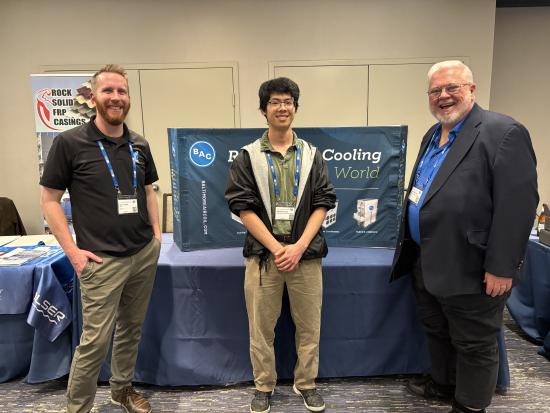
Tim Currie, Benjamin Guo and Frank Morrison with Baltimore Aircoil (left to right).
Brentwood Industries invested in its manufacturing capabilities in Redding, PA, according to Jason Hill, Marketing Specialist. The company celebrated its 60th anniversary in 2025. It manufactures cooling tower fills, nozzles, drift eliminators and inlet louvres.
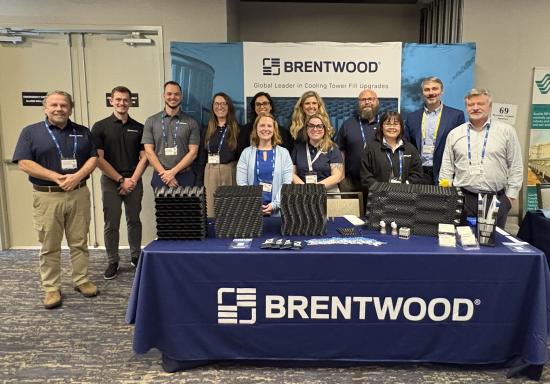
The Brentwood Industries team: back row: Tom Scozzari, Dylen Ziegler, Joshua Wentzel, Kori Boyle, Sophia Hawthorne, Olivia Paules, Jacob Blystone, Clint McCorkle; front row: Angela Zaorski, Sarah Holland, Kim Nguyen, Peter Rye (left to right).
EvapTech opened EvapTech Gulf Services, a new office in the Houston area, to support the energy, petrochemical, industrial and power generation markets concentrated along the Gulf Coast. The local presence enhances its ability to deliver faster response times, closer collaboration and more efficient execution of new construction and retrofit projects. Angie Montes is the location’s office manager.
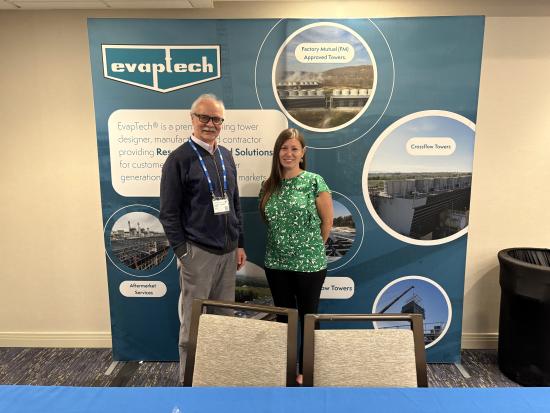
Jean-Pierre Libert and Shannon Kanierim with EVAPCO and EvapTech (left to right).
Nimbus Advanced Process Cooling displayed Virga hybrid adiabatic coolers, as Nimbus explores participation in the STD-201 certification, according to Vamsi Mokkapati, Technical Director. Mokkapati presented How Adiabatic Technology Delivers Performance Savings during the conference.
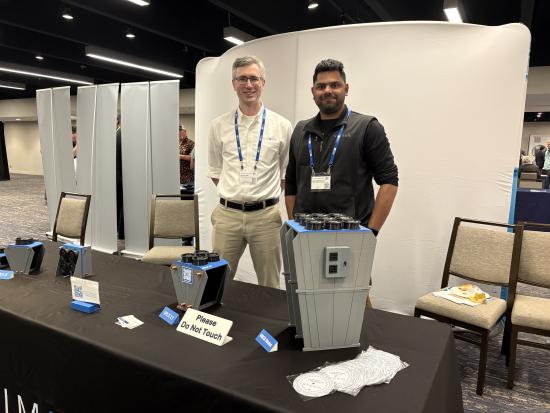
Troy Lyden and Vamsi Mokkapati with Nimbus Advanced Process Cooling (left to right).
Regal Rexnord showed its range of cooling tower accessories and power transmission products, including Falk CT-Series gear drives, composite disk couplings, Cambridge water screen systems and Addax cooling tower brakes.
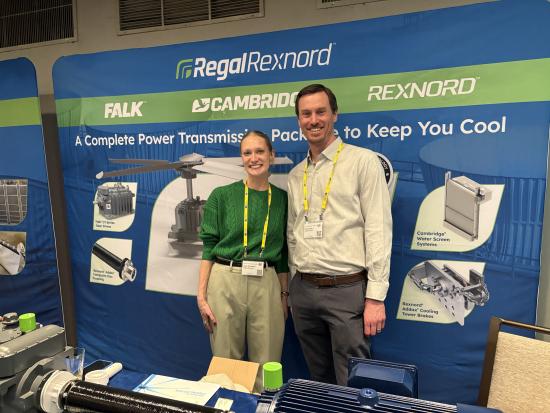
Sam Poweleit and Scott Levy with Regal Rexnord (left to right).
RWI industrial liquid cooling towers are built to provide the small footprint portability needed for auxiliary cooling of process fluids. Available in 6-30 ton capacities, the floating base cooling towers allow auxiliary cooling to be added to any liquid pond.
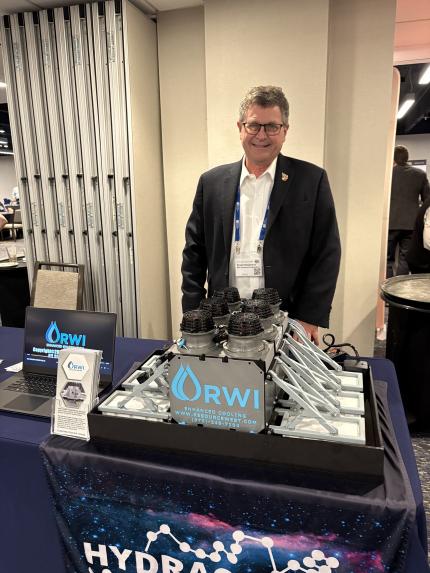
Robert Ballantyne with RWI Enhanced Evaporation.
SPX Cooling Tech recently introduced its OlympusMAX dry and adiabatic fluid cooler lines. Its 60 hp model is rated for 9,553 MBH in dry configuration and 10,900 MBH in adiabatic configuration in CTI-standard rating conditions for dry and adiabatic coolers. According to Aftermarket Key Account Manager Gary Stauffer, SPX Cooling maintains a strong inventory of gearboxes and aftermarket parts.
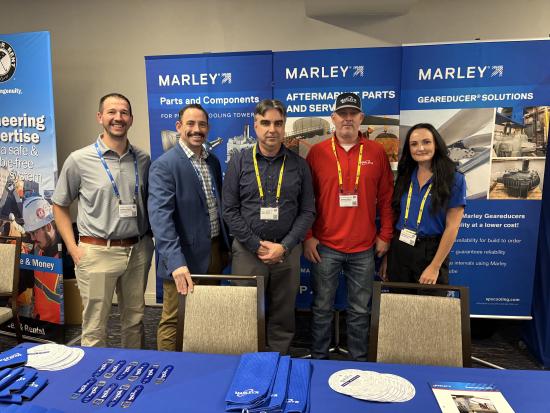
Anthony Shank, Mike Partington, Gary Stauffer, Jeremy Wilson and Kaleigh-Ane Kugel with SPX Cooling Tech (left to right).
WEG discussed its latest cooling tower motor solutions, W80 AXgen motors with axial flux technology, a direct-drive cooling tower motor and W23 SYNC+ IE5 foot-mounted motors.
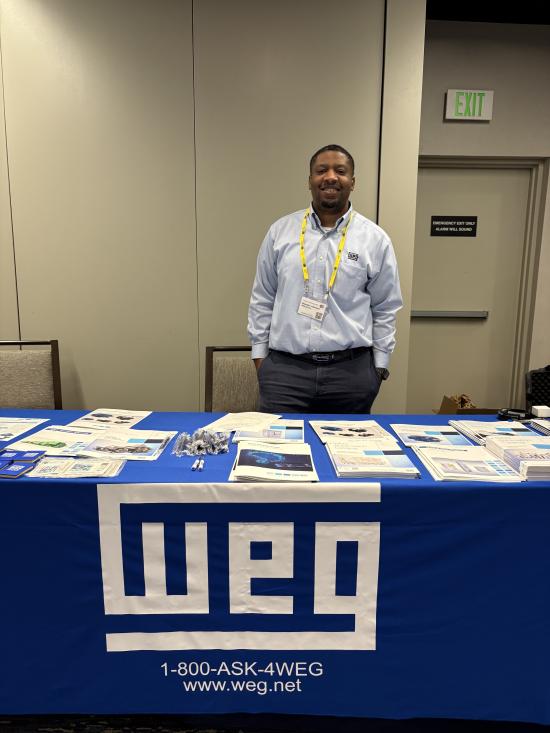
Brandon Johnson with WEG Electric.
The CTI 2027 Annual Conference will take place February 7-10, 2027, at The Peabody Memphis. For more information about the Cooling Technology Institute, visit www.cti.org.
For similar articles on Cooling Technology, visit https://coolingbestpractices.com/technology.
Visit our Webinar Archives to listen to expert presentations on Cooling Technology at
https://coolingbestpractices.com/magazine/webinars.