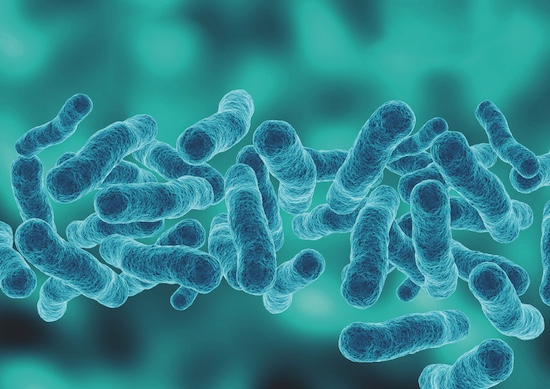
A microscopic view of Legionella pneumophila.
Legionella pneumophila, an aerobic, planktonic (free-floating) bacterium, is a parasite that reproduces by entering biofilm containing higher life forms such as a protozoan or an amoeba. Detecting L. pneumophila in recirculating water systems is a challenge due to the high cost of timely test methods and the lack of an inline sensor for detection.
A simpler method to measure the risk of proliferation of L. pneumophila bacteria is tracking the development of biofilm secreted by higher life forms. Continuous detection of biofilm using an innovative inline sensor and immediate chemical treatment to kill the organisms in the biofilm, including L. pneumophila and other pathogens, dramatically reduces the risk of Legionellosis infections.
Consistently controlling biofilm also increases heat transfer efficiency in heat exchangers. Surprisingly, few professionals are aware of this loss of heat transfer efficiency and most water treatment suppliers are not aware of biofilm sensors. Plant operators need to estimate the biocide feed rate because they have incomplete information about the concentration of bacteria, the presence of biofilm or the impact on heat transfer efficiency.
Measuring the Development of Biofilm
Recirculating water in open cooling systems typically has concentrations of naturally occurring, soluble inorganic, and soluble organic contaminants, as well as suspended particles such as pollen, bacteria, plant material and dust. These contaminants may cause corrosion and deposits and can serve as nutrients for the bacteria in the cooling water. In addition, some water treatment chemicals that control deposits and corrosion also serve as nutrients for bacteria.
During the last decade, there have been few novel biocides or feedback control systems for biofilms. The rudimentary biofilm test is a stainless steel mesh test specimen installed in the first location of an inline test rack. Recently, an on-site, inline biofilm sensor was developed that provides real-time information about the development of biofilm, allowing the control system to feed a non-oxidizing biocide to kill the organisms in the biofilm layer, including L. pneumophila. This sensor provides real-time operating data to improve the heat transfer efficiency of heat exchangers. Plant staff should note the magnitude of heat transfer loss for biofilm as compared to calcium carbonate scale: At the same deposit thickness, biofilm is three-and-a-half to four times as insulating as calcium carbonate scale.
Low-Quality Water Leads to Biofilm Production
Industrial and manufacturing plants consume large quantities of water for heating, cooling and production. In the near term, the greatest water demand will be for evaporative cooling in data centers, especially for computing power for artificial intelligence (AI) applications¹. Climate change and sustainability initiatives, such as blue/green ammonia and carbon capture, require large volumes of water for process cooling and recirculating cooling for the process and electrical power generated by nuclear or fossil fuel plants.
This increasing demand for cooling water is forcing plant owners to find alternate sources of water. Lower-quality water sources have higher concentrations of nutrients, increasing the risk of bacteria proliferation and the associated biofilm in evaporative cooling water systems and the associated water treatment units such as reverse osmosis systems, media filters and ion exchange units.
Critical Concepts for Biofilm Reduction
This article starts with the fundamentals: a review of bacteria, bacteria test methods and the mechanism of biofilm formation. The second part includes operating protocols, biofilm monitoring methods and Legionella risks.
Bacteria. Open recirculating water systems have a variety of bacteria and other higher life forms. The first category is planktonic (free-floating), aerobic bacteria including pathogens such as mature L. pneumophila. Interestingly, fluorescing Pseudomonas bacteria prefer aerobic conditions; however, under denitrifying conditions, these bacteria may convert to anaerobic respiration and thrive in a biofilm. The second category is anaerobic bacteria (sessile bacteria) that do not require oxygen to thrive; they secrete a polysaccharide material (a biofilm) that adheres to surfaces and shelters other micro-organisms and higher life forms such as amoebae and protozoa. The third category is bacteria that survive in either aerobic or anaerobic respiration, depending on the environmental conditions.
Bacteria Test Methods. The routine field test measures aerobic, planktonic bacteria in the bulk water using a paddle tester, also called a dip slide (Figure 1). Another common field test in bulk water is a nucleic acid test that measures total and free ATP² (Figure 2). L. pneumophila is an aerobic bacterium; however, neither the paddle nor ATP field tests can determine the species of bacteria.
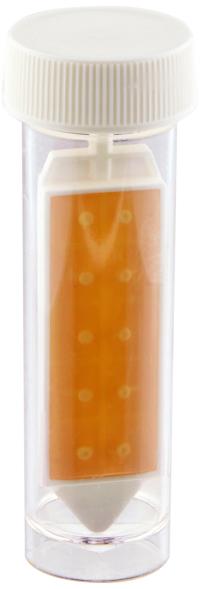
Figure 1. A Hach bacteria paddle tester.
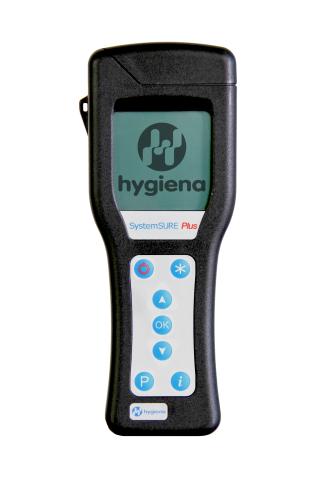
Figure 2. An ATP test device, the Hygiena SystemSURE Plus.
The classic laboratory test for aerobic bacteria is a plate culture (Figure 3) that measures the population of the total aerobic bacteria and, with additional testing, identifies the specific bacterial genus and species (including L. pneumophila). Plate cultures can measure the bacteria that create the biofilm (sessile bacteria) by conducting an incubation in an oxygen-free environment. Laboratory analyses can also use a genetic method called q-PCR to identify the genus and species of L. pneumophila.

Figure 3. Legionella growing on a plate culture (courtesy CDC/James Gathany - CDC Public Health Image Library).
Bio-detectors³ (Figure 4) are field tests that provide estimates of denitrifying bacteria, fluorescing Pseudomonas, slime-forming bacteria and sulfate-reducing bacteria. Detection of free-floating gram-negative bacteria in a water sample increases the likelihood of biofilm on the heat transfer surfaces. However, it’s not an accurate measurement of sessile bacteria that exist in the biofilm.
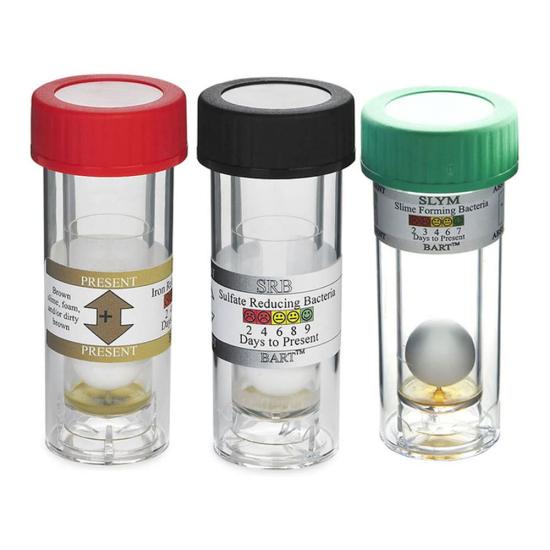
Figure 4. Hach bio-detectors.
Mechanism of Biofilm Formation. As shown in Figure 5, the development of biofilm begins with sessile or gram-negative bacteria in the bulk water seeking a suitable surface. These bacteria hover over a submerged surface, such as a tube in a heat exchanger, a process known as quorum sensing. If the surface is suitable, the bacteria settle on the surface. The next step is colonization: The bacteria excrete extracellular material to attach to the surface. This is biofilm. The biofilm creates a low-oxygen environment for sessile bacteria and higher life forms such as amoebae, protozoa and viruses to thrive. Nutrients such as nitrates, sulfates and phosphates will diffuse into the biofilm, allowing the proliferation of microorganisms in the biofilm layer and increasing its thickness.
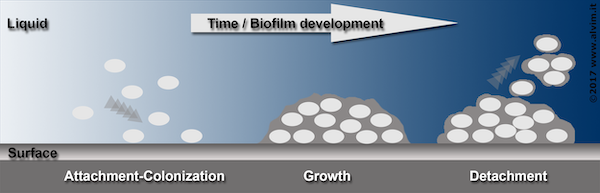
Figure 5. The mechanics of biofilm creation (courtesy of ALVIM Srl).
Operating Protocols. Continuous versus intermittent duty cycles and heat flux (including process heat exchangers and surface condensers, refrigeration and air compressor systems, chillers, steam absorption and plate and frame heat exchangers and humidification systems) have a large influence on the development of biofilm.
Process Heat Exchangers and Surface Condensers. These typically operate continuously at high heat transfer rates and high temperatures on the heat transfer surfaces. Most process heat exchangers have a shell and tube design, with process on the shell side, and cooling water on the tube side. In large plants, the typical sources of makeup water for evaporative cooling systems are wells, clarified surface waters or filtered seawater. Bacteria and nutrients in the makeup stream enter the evaporative cooling water system, increasing the risk of biofilm.
Process contaminants that leak into the recirculating cooling water often serve as nutrients for bacteria and the proliferation of biofilm. Detecting process contaminants in the bulk cooling water is difficult due to dilution by return water from other heat exchangers. The warning sign for significant formation of mineral scale or biofilm is a dramatic increase in the temperature of the cooling water at the exit of the heat exchanger. However, most plants lack temperature sensors on individual heat exchangers for the cooling water.
Plant operators must rely on the intermittent feed of non-oxidizing biocide to reduce the sessile bacteria concentration and control the proliferation of biofilm. Water treatment suppliers use a relatively simplistic approach to determine biocide concentrations and dosing frequency, monitoring the ambient conditions and occasionally conducting semi-quantitative field tests or laboratory cultures for anaerobic bacteria in the bulk water. Consequently, operators cannot consistently detect and/or control biofilm proliferation.
Refrigeration Units and Air Compressors. These systems operate like process cooling applications. Makeup water for refrigeration and air compressor cooling systems may be potable or treated water. For these systems, the level of biofilm increases or decreases based on the effectiveness of the biocide treatment, the amount of nutrients or process contaminants in the cooling water and the Reynolds Number (the factor that limits the thickness of the boundary layer and surface area of biofilm). Similar to process heat exchanger systems, the procedures for biocide feed and biofilm monitoring and control are rudimentary, typically resulting in poor biofilm control.
Humidification Systems. These operate at ambient or chilled temperatures, spraying water into a forced air plenum. At the discharge of the supply duct, the humidified air contains a small concentration of water droplets. If these tiny droplets have pathogenic bacteria, there is a risk of Legionellosis infections in persons with compromised immune systems. This infection mechanism occurred in 1976 at the Bellevue-Stratford Hotel in Philadelphia during an American Legion convention. The contaminated water droplets in the central air conditioning system infected 182 people and resulted in 34 deaths.
Chillers, Steam Absorption Units and Plate and Frame Heat Exchangers. These usually operate intermittently based on seasonal atmospheric conditions and building occupancy. Systems operating continuously have a lower risk of L. pneumophila and biofilm. These systems have lower heat transfer rates and lower temperatures on the heat transfer surfaces than other types of heat exchangers. Most comfort cooling systems use potable water for makeup. Industrial sites and data centers typically use non-potable water for makeup. The use of reclaimed water is increasing, especially for data centers and arid locations like the southwest. The cost of reclaimed water is 10% that of potable water. However, non-potable makeup water increases the concentration of bacteria and nutrients as compared to potable water and increases the risk of sessile bacteria and proliferation of biofilm and L. pneumophila.
A Day in the Life of a Chiller Plant
Intermittent operation is another factor in cooling systems. Consider a day in the life of a chiller that has cyclical operation and periods of low flow or stagnant water.
If the chiller has no biofilm, free-floating L. pneumophila cannot reproduce. However, in most chillers, there is some biofilm on the heat transfer surface during normal operation.
Plant operators match the number of operating chillers to the heat load in the building and current and near-term environmental conditions. Operating chillers run at partial load to rapidly provide excess capacity as the heat load increases. Ideally, operators proactively monitor the amount of excess chiller capacity and accommodate the lead time to place an idled chiller into service.
As the heat load or outside temperature decreases, the plant operator idles chillers. In a recently idled chiller, the aerobic, planktonic bacteria consume the dissolved oxygen and nutrients and reproduce in the warm, stagnant water. As the concentration of dissolved oxygen decreases, the viability of the aerobic, planktonic bacteria decreases and the anaerobic, sessile bacteria in the biofilm continue to consume nutrients and reproduce, increasing the thickness of the biofilm. If juvenile L. pneumophila bacteria are incubating in the biofilm, they will thrive, increasing the thickness of the biofilm.
As the heat load or outside temperature increases, the plant operator re-commissions idled chillers. In a chiller returned to service, the force of water flowing through the condenser tubes shears the top layer of the biofilm, releasing juvenile L. pneumophila and anaerobic, sessile bacteria into the bulk water. These bacteria flow through the cooling tower and back into the condenser side of all the chillers, inoculating the entire cooling water system.
This dynamic cycle of idling and returning chillers to service dramatically increases the risk of L. pneumophila proliferation and decreases the accuracy of the biocide feed and biofilm control.
Biofilm Monitoring Methods
Measuring free-floating bacteria does not correlate with the concentration of sessile bacteria in biofilm. Routine paddle test and ATP measurements are not suitable for biofilm measurements. As described previously, it’s nearly impossible to accurately feed non-oxidizing biocide feed without biofilm measurements.
Measuring heat transfer loss from biofilm in an installed heat exchanger or chiller is impractical: the system must have flowmeters and temperature sensors on the inlet and outlet water streams. There are four technologies to monitor biofilm in the field: a model heat exchanger, a mesh coupon in the bypass corrosion coupon rack, a device that models the heat transfer and fluid velocity of a specific heat exchanger and an in situ electrochemical device.
A mesh test specimen in the first location in an online test rack is a low-tech, online, intermittent biofilm test (Figure 6). There are two options for the design of the test specimen: stainless steel or stainless steel mesh (Figure 7).
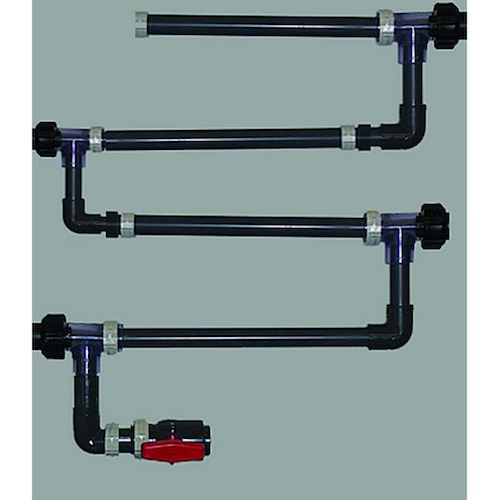
Figure 6. An online test rack from Nova-Tech.
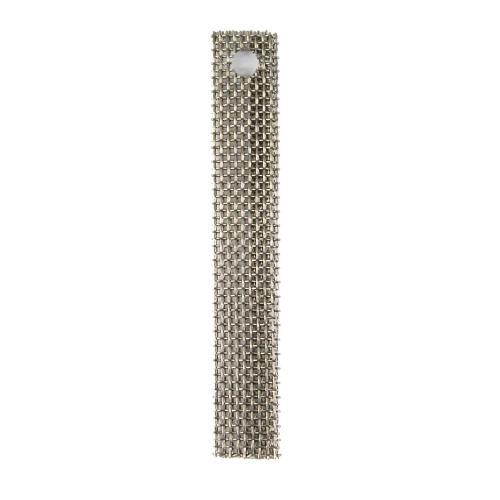
Figure 7. A stainless steel mesh test specimen from Pacific Sensor.
This test provides trend information; the duration of the test varies based on experience and current operating conditions. The typical test duration is one month. Heat exchangers operating seasonally or intermittently have a higher rate of biofilm proliferation than those in constant operation. The simplest analysis is to remove the coupon from the bypass rack and touch the surface of the biofilm coupon. The semi-quantitative method places the biofilm coupon in 100 ml of distilled water and uses an ultrasonic device to remove the biofilm from the surface of the coupon followed by one or more tests: ATP, biodetectors and laboratory plate cultures.
A novel electrochemical device, the ALVIM Biofilm Monitoring System, uses an inline electrode to detect biofilm. This highly sensitive electrochemical sensor detects bacteria immediately after settling on the surface and before the production of a slime layer. The intensity of the signal increases with the extent of biofilm.
The sensor in Figure 8 has a robust user interface that provides graphical historical data to support troubleshooting and corrective actions. Figure 9 shows an example of automated biocide treatment based on a specified sensor signal.
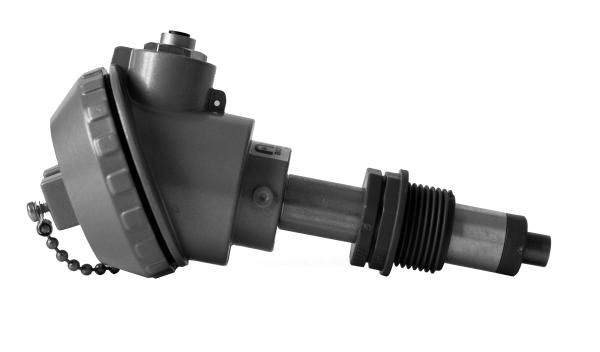
Figure 8. An electrochemical biofilm sensor (courtesy of ALVIM Srl).
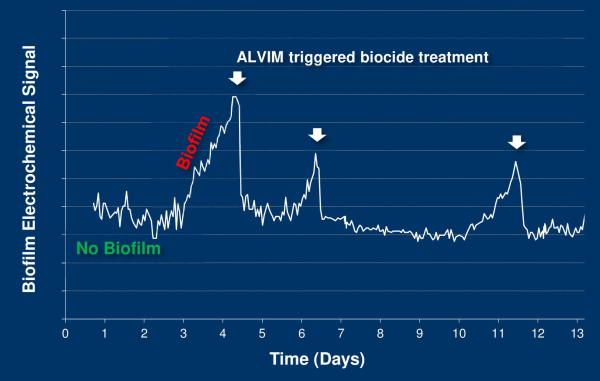
Figure 9. A sample of sensor data (courtesy of ALVIM Srl).
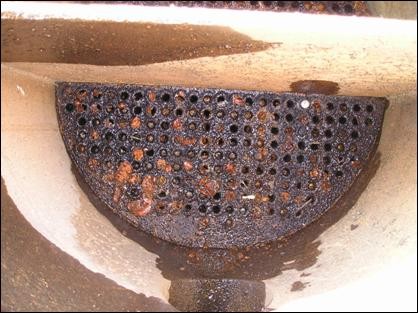
Figure 10. Biofilm on a heat exchanger tube sheet.
Conclusions
Biofilm is an invisible source of lost heat transfer efficiency. Most open recirculating water systems have biofilm and a risk of L. pneumophila bacteria. Intermittent dosing of non-oxidizing biocides is not a robust method to manage the loss of heat transfer efficiency or the risk of proliferation of L. pneumophila bacteria in open, recirculating water systems. Monitoring biofilm is critical because it’s impossible to accurately feed non-oxidizing biocide or measure the concentration of sessile bacteria.
The use of one or more technologies to monitor biofilm will recover lost heat transfer and reduce the annual cost of expensive non-oxidizing biocides. In addition, promptly feeding biocide based on a real-time biofilm sensor reduces the risk of Legionellosis infections from evaporative cooling towers and other devices that generate aerosols (water droplets).
¹ AI requires up to ten times as much energy as a standard web search.
² ATP - Adenosine Tri-Phosphate.
³ https://cdn.hach.com/7FYZVWYB/at/cxv62tqh9rt7rxh37pbkr5j/BART_Test__Procedure_Instructions-Lit8436.pdf.

About the Author
Loraine A. Huchler, P.E., CMC®, FIMC, is the founder and president of MarTech Systems, a consulting firm that assesses and manages risk in water and glycol-related utility systems. Huchler has a Bachelor of Science degree in chemical engineering from the University of Rochester, is licensed as a Professional Engineer and has earned the accreditation of Certified Management Consultant®.
About MarTech Systems
MarTech’s technical consulting services optimize water systems in influent, steam and cooling systems in industrial facilities and cooling water systems in large-scale corporate facilities, university campuses, data centers and manufacturing facilities. Other services include technology feasibility studies, water conservation and water reuse studies, technical training and serving as an expert witness in patent infringement and equipment failure litigation. Visit https://www.martechsystems.com.
To read similar Cooling Tower articles, visit https://coolingbestpractices.com/technology/cooling-towers.
Visit our Webinar Archives to listen to expert presentations on Cooling Technology at https://coolingbestpractices.com/magazine/webinars.