Codes, regulations or standards that govern design, performance, safety and energy efficiency
In the world of industrial and commercial cooling, performance is only part of the equation. Facility managers, engineers and operations professionals must also navigate an intricate web of codes – regulatory frameworks that govern elements such as structural integrity and thermal efficiency.
Understanding what these codes are, where they apply and how they affect your projects isn’t just a matter of compliance – it’s about protecting your assets, ensuring operational uptime and making sound investments.
This article breaks down the most critical codes affecting cooling towers, closed-circuit coolers, evaporative condensers and related equipment, explaining why they matter to the professionals responsible for selecting, installing and maintaining them.
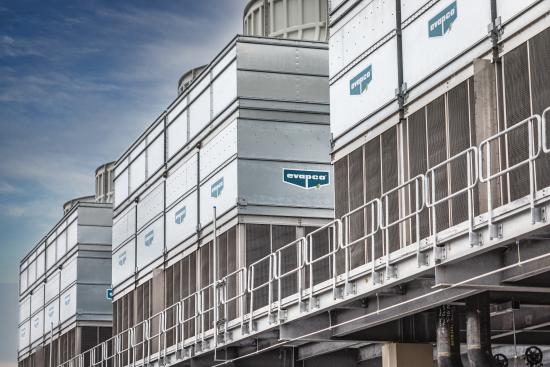
Cooling towers installed on an elevated steel platform, delivering high-capacity heat rejection for a large-scale industrial facility.
The Basics of Industrial and Commercial Cooling Codes
Codes refer to legally binding regulations or standards that govern design, performance, safety and energy efficiency. They’re developed by federal and state agencies, international organizations and independent certification bodies.
Unlike guidelines or best practices, codes carry sufficient weight to be enforceable; noncompliance can lead to severe consequences. These might include failed inspections, costly project delays, significant legal liability and even issues with insurance coverage that could leave your organization exposed in the event of equipment failure or an incident.
The development of cooling system codes is a rigorous process, often involving extensive research, public review and consensus-building among experts from various fields, including engineering, manufacturing, academia and regulatory bodies. This ensures the codes are not arbitrary, but are based on sound scientific principles, industry best practices and lessons learned from past incidents. Their purpose is to establish a baseline of safety, performance and environmental responsibility, protecting not only the equipment itself but also the personnel who operate and maintain it, the surrounding environment and the financial interests of the facility owner.
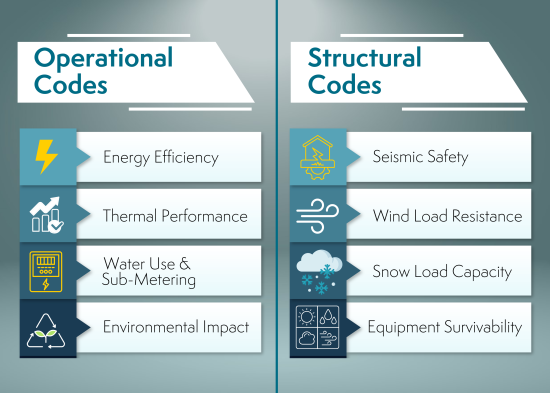
Codes generally fall into two major categories, each addressing a critical aspect of cooling system deployment and operation:
Performance and Efficiency Codes: These are primarily concerned with the ongoing efficiency and environmental impact of cooling systems. This includes giving meticulous attention to energy efficiency, ensuring systems consume minimal power to achieve desired cooling loads, thereby reducing operational costs and carbon footprints. They also cover thermal performance, guaranteeing equipment delivers its specified cooling capacity reliably. These codes often include mandates or guidelines related to water use, promoting conservation through efficient makeup water strategies and effective blowdown management, and sometimes even requiring sub-metering to track consumption.
Structural Codes: These address the fundamental physical safety, resilience and survivability of equipment when subjected to various adverse environmental conditions. This includes designing and installing systems to withstand seismic events (earthquakes), extreme wind loads (hurricanes, tornadoes) and heavy snow accumulations. Beyond merely preventing collapse, structural codes often dictate requirements for equipment to remain operational, or at least safely secured, after such events, particularly for critical infrastructure.
The Indispensable Role of Cooling System Code Compliance
For professionals in the field, codes aren't just bureaucratic checklists to be grudgingly satisfied. They are fundamental guardrails touching every phase of a cooling system's lifecycle, from initial conceptualization to eventual replacement. Understanding and adhering to these codes isn't just about avoiding penalties; it's about strategic asset management, risk mitigation and long-term operational success.
Here's a deeper dive into how codes impact each critical phase:
- Design: The initial design phase is where code compliance is either built in or overlooked. There can be consequences.
- Installation: This is where the theoretical aspects of design meet the practical realities of construction. Non-compliant mounting, inadequate anchoring or structural components not meeting specified performance criteria can lead to immediate and serious repercussions.
- Operation: Once a system is operational, codes continue to play a role, particularly concerning efficiency. Energy and water inefficiencies, often a direct result of poor compliance with operational codes, directly translate to higher operating costs.
- Maintenance and Upgrade: Even existing systems aren’t immune to code requirements. When planning for replacement cycles, significant upgrades or major repairs, existing systems often must be brought up to current prevailing codes. This means an older, grandfathered system might require more robust structural reinforcement or an efficiency upgrade that wasn't necessary when it was originally installed.
Ultimately, failure to comply can lead to devastating consequences, including operational shutdowns that cripple production, rejected inspections that halt progress, hefty fines that impact budgets or, in the worst-case scenario, systems that catastrophically fail during high wind or seismic events, endangering personnel and causing immense property damage.
Operational Codes You Must Know
Operational codes are the backbone of sustainable and cost-effective cooling system management. They ensure equipment not only performs its primary function, but also does so with minimal environmental impact and optimized resource consumption.
ASHRAE 90.1 (2022) – the Energy Efficiency Standard for Buildings
ASHRAE 90.1, the "Energy Standard for Buildings Except Low-Rise Residential Buildings," is arguably the most widely adopted and influential benchmark for building energy performance across the United States and beyond.
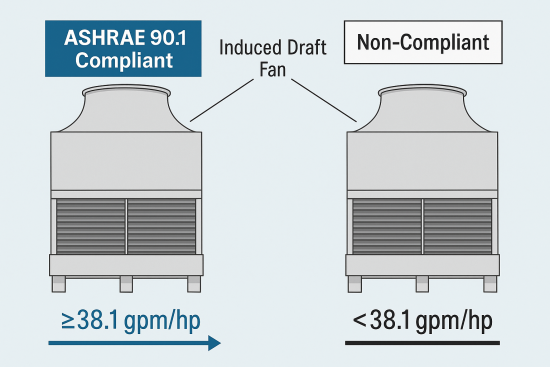
Developed by the American Society of Heating, Refrigerating and Air-Conditioning Engineers (ASHRAE), this standard sets minimum efficiency requirements for a broad spectrum of building systems, including HVAC, lighting and, crucially, large cooling equipment, including cooling towers, closed-circuit coolers and evaporative condensers. For cooling systems, ASHRAE 90.1 specifies minimum performance thresholds typically measured in gallons per minute per horsepower (gpm/hp), reflecting the cooling capacity achieved per unit of energy consumed by the fan motor. Each type of cooling equipment (e.g., induced draft, forced draft, cooling tower, closed circuit cooler) has different minimum gpm/hp requirements; see examples below:
- Induced Draft Cooling Towers: The standard typically mandates a minimum efficiency of ≥40.2 gpm/hp when operating at ASHRAE 90.1 pre-determined conditions (e.g., 95°F/35°C entering water temperature, 85°F/29°C leaving water temperature, and 75°F/24°C wet-bulb temperature). This metric is a direct indicator of how efficiently the tower uses fan energy to reject heat. Higher gpm/hp values signify greater efficiency.
- Forced Draft Closed Circuit Coolers: For these systems, which cool a process fluid indirectly without exposing it to the atmosphere, the efficiency threshold is typically ≥7.0 gpm/hp at ASHRAE 90.1 pre-determined conditions (e.g., 102°F/39°C entering process fluid, 90°F/32°C leaving process fluid, 75°F/24°C wet-bulb temperature).
Why it Matters to You
- Qualifying for Incentives: Adherence to ASHRAE 90.1 is often a prerequisite for various financial incentives. This includes earning points towards LEED (Leadership in Energy and Environmental Design) certification, a globally recognized symbol of sustainability achievement. Many utility companies offer significant rebates for installing equipment that exceeds minimum efficiency standards, directly reducing the capital expenditure of new projects.
- Reducing Operating Costs: Perhaps the most tangible benefit for facility managers is the direct reduction in operational energy use. In process cooling environments, where cooling systems often run continuously, the cumulative savings from even a slight increase in efficiency can be enormous.
- Permitting and Interconnections: In many jurisdictions, compliance with ASHRAE 90.1 (or a local energy code that adopts or references it) is a mandatory requirement for obtaining building permits and utility interconnections. Non-compliance can lead to delays in project commissioning, costly redesigns or even outright rejection of a project until it meets the necessary energy performance criteria.
Title 24 – California’s Energy Code
California’s Title 24, officially known as the California Building Standards Code, Part 6: California Energy Code, is renowned for its progressive and often more stringent energy efficiency requirements compared to national standards. While it incorporates many aspects of ASHRAE 90.1, it frequently exceeds them, particularly concerning energy and water conservation, reflecting California's aggressive climate goals and water scarcity challenges.
For cooling systems, Title 24's specific requirements include:
- Enhanced Efficiency for Induced Draft Cooling Towers: Title 24 often sets a higher bar for cooling tower efficiency, for example, mandating ≥42.1 gpm/hp, which is more stringent than ASHRAE 90.1's baseline. This pushes manufacturers to innovate and produce even more efficient equipment.
- Mandatory Water Metering: A distinctive feature of Title 24, especially for larger cooling systems, is the requirement for mandatory water metering of both makeup and blowdown water. This isn't just about tracking; it's about enabling facilities to monitor their water consumption closely, identify leaks or inefficiencies and implement water-saving strategies. It provides valuable data for water management and can be crucial for compliance during drought conditions.
Why it Matters to You
Even if a facility isn't located in California, understanding Title 24 is highly beneficial. Many leading equipment manufacturers, due to the sheer size and influence of the California market, design and build their standard products to meet or exceed Title 24 standards. This means that a "Title 24 compliant" cooling system often represents the cutting edge of energy and water efficiency, offering benefits that extend beyond California's borders.
For those outside California, specifying equipment that meets Title 24 can proactively future-proof installations against evolving national or regional energy codes and signify a commitment to advanced sustainability practices.
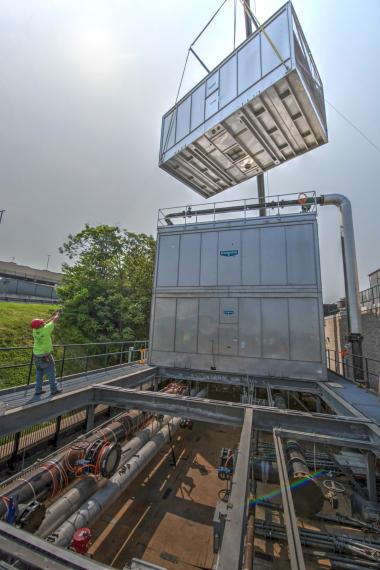
A crossflow cooling tower rigged and assembled on-site, highlighting the precision and teamwork required for proper installation.
Structural Codes You Must Know
Beyond efficient operation, cooling systems must demonstrate the fundamental ability to withstand the forces of nature and other potential hazards. Structural codes address these critical aspects, ensuring the physical safety, resilience and survivability of equipment under adverse conditions. For facilities in high-risk zones, understanding and adhering to these codes is paramount to protecting both personnel and valuable assets.
IBC – International Building Code
The International Building Code (IBC) is a widely adopted model building code in the United States, providing comprehensive regulations for structural safety, fire safety and accessibility, among other things. For large mechanical equipment, including cooling systems, the IBC dictates how these massive structures must be designed and anchored to ensure they remain secure and functional, particularly under external loads.
Key aspects of IBC for cooling systems include:
- Importance Factor (IP): This crucial factor determines the level of seismic and wind resistance required for a structure or component based on its occupancy category and potential risk to public safety.
- IP = 1.0 (Standard Facilities): For typical commercial and industrial facilities, an Importance Factor of 1.0 applies. This generally means the equipment must be designed and anchored to remain attached to the building structure during a prescribed seismic event or extreme wind load, preventing it from becoming a hazard. While operational integrity is desirable, the primary concern is preventing collapse or detachment.
- IP = 1.5 (Critical Facilities): For essential facilities where continued operation after an event is critical for public welfare or safety, an Importance Factor of 1.5 is mandated. This includes hospitals, emergency response centers, power plants and facilities housing hazardous materials (e.g., ammonia refrigeration plants). For these applications, cooling systems must be engineered not only to remain attached but also to remain operational after a seismic event or extreme weather, allowing the critical facility to continue its function. This makes it necessary for manufacturers to invest time and resources to test more robust structural designs, specialized seismic restraints and verified resilience.
- Seismic Design Specification (SDS): This specifies the required seismic forces for a given location and site. SDS values are derived from detailed site-specific geologic data, including soil conditions and proximity to fault lines. A higher SDS indicates a greater anticipated ground motion and, consequently, more robust structural requirements for the equipment and its anchorage. Engineers use SDS values to calculate the lateral forces the cooling system must withstand.
- Wind load (P): Based on the wind maps provided in ASCE 7 (discussed later), the IBC specifies how wind pressures are calculated and applied to structures. This is particularly critical in hurricane-prone regions, including Florida, the Gulf Coast and coastal Texas, where cooling towers are exposed to significant uplift and lateral forces. Manufacturers must design cooling tower casings, fan decks and internal structures to resist these forces. Installation must include appropriate anchoring.
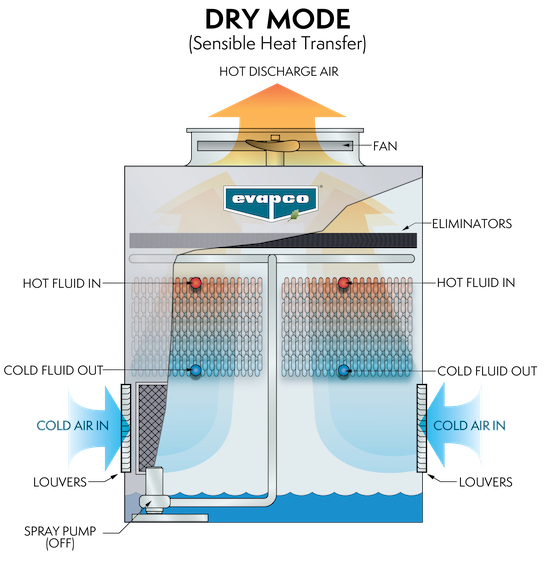
This closed-circuit cooler operates in dry mode by directing airflow over the coil surface to reject heat without using water, maximizing energy efficiency in suitable conditions.
ASCE 7 – Load Calculation Standard
ASCE 7, "Minimum Design Loads and Associated Criteria for Buildings and Other Structures," published by the American Society of Civil Engineers, is a pivotal standard that complements the IBC. It provides detailed methodologies and data for calculating various types of loads that buildings and their components, including large cooling systems, must be designed to withstand. While engineers perform the complex calculations based on ASCE 7, facility managers must understand its implications to ensure they specify equipment capable of meeting site-specific loads.
ASCE 7 provides precise calculations for:
- Seismic Activity Zones: It defines seismic design categories for different geographic regions, along with ground motion parameters, allowing engineers to calculate the inertial forces equipment will experience during an earthquake.
- Wind Speeds by Geography: ASCE 7 includes detailed wind speed maps, providing basic wind speeds for various locations across the U.S. These maps are crucial for calculating the design wind pressures on structures and equipment, accounting for factors like terrain exposure and building height.
- Snow Loads: In northern climates, ASCE 7 specifies methods for calculating snow loads on roofs and elevated equipment, ensuring the structure can support the weight of accumulated snow without failure. While less common for standalone cooling towers unless located on rooftops, it's a factor for accessory structures or platforms.
Why it Matters to You
While facility managers typically don't perform these complex calculations, a fundamental understanding of ASCE 7's role is crucial. When purchasing or designing a cooling system, you should be able to communicate your site's specific requirements (e.g., location, importance factor, exposure category) to your engineers and equipment suppliers. This ensures the chosen cooling system is properly rated and designed to withstand the actual environmental forces it will encounter, preventing costly damage or catastrophic failure. Always request documentation from manufacturers demonstrating compliance with ASCE 7 for specified site conditions.
FBC – Florida Building Code
The Florida Building Code (FBC) represents a significant enhancement over the national IBC and ASCE 7 standards, specifically tailored to address the unique challenges posed by Florida's severe hurricane climate. Given the frequent and intense tropical storms, the FBC incorporates more stringent requirements to ensure buildings and their components can withstand extreme wind loads, impacts from flying debris and prolonged exposure to harsh environmental conditions.
For cooling systems installed in Florida, the FBC often dictates:
- Enhanced Anchoring Requirements: Beyond standard IBC anchoring, FBC specifies more robust and detailed requirements for how equipment must be anchored to supporting structure. This includes prescriptive fastener types, spacing and connection methods designed to resist extreme uplift and lateral forces during high winds.
- Impact Resistance: In certain "high-velocity hurricane zones" (HVHZ), equipment or its enclosures may need to demonstrate resistance to impact from wind-borne debris. While less common for the primary structure of a large cooling tower, this might apply to access panels, louvers or associated components.
- Fastener Requirements: The FBC provides specific criteria for the type, material and corrosion resistance of fasteners used in equipment construction and installation, particularly given Florida's humid, corrosive environment.
When procuring cooling systems for Florida installations, it’s critical to verify equipment is approved by the FBC. Many manufacturers (including EVAPCO) offer models that specifically comply with FBC. Insist on documentation, such as a Florida Product Approval (FL#), which indicates that the product has undergone rigorous testing and review to meet the FBC's stringent criteria. Without this, your project could face significant delays, rework or outright rejection by building inspectors.
OSHPD/HCAI – California’s Healthcare Requirements
In California, the Office of Statewide Health Planning and Development (OSHPD), now known as the California Health Care Access and Information (HCAI) agency, sets some of the most rigorous seismic requirements in the world for healthcare infrastructure. Given the critical nature of hospitals and other healthcare facilities – which must remain operational during and after a major earthquake to provide emergency services – HCAI regulations go far beyond typical building codes.
Manufacturers of cooling towers and other essential equipment are required to renew HCAI approval every six years. The approval process requires:
- Shake-table Testing: A unique and stringent requirement is that critical equipment, including cooling towers, must pass independent shake-table testing. This involves physically mounting the equipment on a large platform that simulates the ground motions of a severe earthquake. The equipment must not only remain structurally intact, but also demonstrate functional integrity after the simulated seismic event. This rigorous testing provides a high level of assurance regarding the equipment's resilience.
- Applicability: These stringent requirements apply directly to cooling towers and other HVAC components serving hospitals, skilled nursing facilities and other critical care environments where uninterrupted operation is literally a matter of life and death.
- Importance Factor (IP = 1.5) Rated Equipment: As mentioned under IBC, all equipment for HCAI-regulated facilities must meet the IP = 1.5 rating, signifying it is designed to remain fully operational after a seismic event.
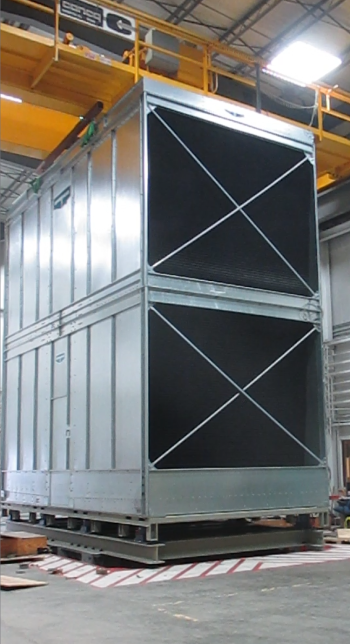
A crossflow cooling tower undergoing seismic shake table testing to validate structural integrity and performance under dynamic conditions.
Why it Matters to You
For those managing or specifying equipment for healthcare facilities in California, understanding HCAI requirements is non-negotiable. Only manufacturers that have invested in the necessary engineering, testing and documentation can provide HCAI-compliant equipment. Specifying such equipment ensures patient safety, avoids regulatory roadblocks and protects the facility's ability to respond to emergencies.
Performance Verification: The Indispensable Role of CTI Certification
While codes mandate minimum efficiency and structural integrity, how can facility professionals be sure that the cooling equipment they purchase will perform as advertised? This is where third-party certification bodies, including the Cooling Technology Institute (CTI), play a vital role. CTI certification provides an independent, unbiased verification of thermal performance, giving end-users confidence in their investment.
CTI STD-201 and ATC-105: The Gold Standard for Thermal Performance
The CTI is a non-profit organization dedicated to advancing cooling tower technology. Its certification programs are recognized globally as the gold standard for verifying the thermal performance of evaporative cooling equipment.
CTI STD-201 (Standard for Certification of Cooling Towers): This standard defines the requirements for participating in the CTI Product Certification Program. It outlines the procedures for submitting product data, the scope of the certification and the ongoing obligations of manufacturers, including regular audits and performance verification.
CTI ATC-105 (Acceptance Test Code for Water Cooling Towers): This code provides detailed methodology and procedures for conducting thermal performance tests on cooling towers. It specifies measurement points, instrumentation, calculation methods and acceptable tolerances. When a cooling tower undergoes a CTI-certified test, it is conducted under the strict guidelines of ATC-105 to ensure accuracy and repeatability.
How Certification Works
For a cooling tower model to achieve CTI certification, it must undergo a rigorous process that typically includes:
Initial Performance Verification: A randomly selected production unit of the specific model is tested either in a CTI-approved laboratory or under controlled field conditions according to ATC-105. The test results must demonstrate the tower meets or exceeds its published thermal performance ratings.
Annual Performance Verification: To maintain certification, manufacturers are subject to annual, unannounced performance verification tests on randomly selected units from their production lines. This ensures ongoing adherence to certified ratings.
Transparent Data Publication: CTI publishes a directory of certified models, making it easy for specifiers and purchasers to verify a product's certified status.
Manufacturing Audits: CTI also conducts audits of manufacturing facilities to ensure that quality control processes are in place to consistently produce equipment that meets the certified design.
Why CTI Certification Matters to You
Validates Thermal Performance: The most significant benefit is the assurance the cooling system will deliver its rated thermal capacity under specified conditions. Without CTI certification, you're relying solely on manufacturer claims, which may or may not be accurate in real-world applications. CTI certification eliminates the need for expensive and time-consuming field performance testing (unless a specific acceptance test is required by contract), saving you significant commissioning costs and potential disputes.
Simplifies Code Compliance and Rebate Eligibility: Many energy codes (e.g., ASHRAE 90.1) and utility rebate programs explicitly reference CTI certification as a means of verifying equipment efficiency. Opting for a CTI-certified unit streamlines the compliance process and makes it easier to qualify for financial incentives, accelerating your ROI.
Avoids Over- or Under-Sizing: Knowing the true performance capabilities of a cooling system prevents costly mistakes. An undersized system will fail to meet cooling loads, leading to process disruptions or reduced product quality. An oversized system represents unnecessary capital expenditure and potentially higher operating costs due to inefficient partial load operation. CTI certification ensures you get the right size for the job.
Shields Specifying Engineers and Contractors from Liability: For consulting engineers and contractors, specifying CTI-certified equipment provides a critical layer of protection. If a system fails to meet performance expectations, the responsibility typically falls on the manufacturer, as its product has been independently verified. This reduces professional liability and builds confidence in the specification process.
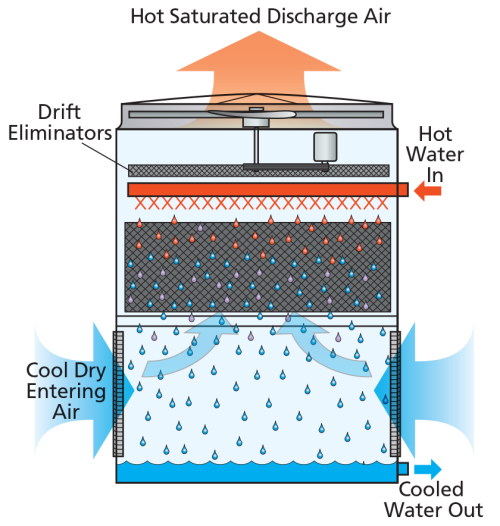
This induced draft, counterflow cooling tower cools water by combining airflow and evaporation, releasing warm air out the top while recirculating cooled water back into the system.
Building Codes Aren’t Static – They Evolve
The world of building codes and standards isn’t stagnant; it’s a dynamic environment driven by technological advancements, lessons learned from past events and societal concerns (such as climate change and water scarcity). Codes like ASHRAE 90.1 and Title 24 typically undergo comprehensive revision cycles every three to four years. Similarly, the IBC and ASCE 7 are periodically updated to incorporate new scientific understanding of natural hazards and improved engineering practices.
Staying current with these revisions isn’t just a best practice—it's crucial for several reasons:
- Bidding New Projects: When bidding on new construction or major renovation projects, the applicable codes are always the most current adopted versions by the local jurisdiction. Bidding based on outdated code knowledge can lead to non-compliant proposals, wasted effort and project rejections.
- Upgrading Old Systems: As discussed earlier, major upgrades or replacements of existing systems often trigger the requirement to bring the entire system (or the upgraded components) up to current code standards, even if the original installation was grandfathered. This impacts design, material selection and installation.
- Seeking Incentives: Utility rebates and tax incentives are frequently tied to compliance with the latest versions of energy efficiency codes. Failing to meet the most recent standard can mean missing out on significant financial benefits.
- Navigating Re-permitting or Audits: Any change of occupancy, significant modification or routine regulatory audit may require re-permitting, which will necessitate compliance with current codes. Being prepared for these eventualities is key to avoiding delays and penalties.
Facility managers and engineers should actively engage with industry associations, subscribe to updates from relevant code bodies and maintain relationships with knowledgeable consultants and equipment manufacturers who stay abreast of these changes.
At-a-Glance: Common Codes by ApplicationHere's a concise overview of the key codes and standards discussed, highlighting their primary focus, where they generally apply and their direct impact on cooling system stakeholders: |
|||
|
Code/Standard |
Covers |
Applies |
Stakeholder Impact |
|
ASHRAE 90.1 |
Energy efficiency |
National |
Energy modeling, utility rebates, building code compliance |
|
Title 24 |
Energy and water efficiency |
California |
Equipment selection, mandatory water tracking, advanced efficiency |
|
IBC |
Structural integrity |
National (model code) |
Anchoring specifications, seismic and wind design inputs |
|
ASCE 7 |
Load calculations (seismic, wind, snow) |
National |
Provides design inputs for engineers (forces, pressures) |
|
FBC |
Enhanced wind/hurricane safety |
Florida |
Requires structural upgrades, specialized anchoring, product approval |
|
HCAI/OSHPD |
Seismic resilience in healthcare |
California (for healthcare facilities) |
Requires shake-table testing, IP=1.5 rating, critical uptime |
|
CTI STD-201/ATC-105 |
Thermal performance verification |
International |
Certifies real-world efficiency, ensures delivered capacity, reduces liability |
Codes Safeguard Your Cooling System Investment
In the dynamic arena of industrial and commercial facility management, every major equipment decision carries significant implications for capital expenditure, operational costs and long-term reliability. When it comes to large cooling systems, the realm of codes and standards emerges not as a mere compliance checkbox, but as a powerful value driver directly impacting ROI.
These essential regulations – ASHRAE's efficiency mandates, California's stringent Title 24, the structural integrity dictated by IBC and ASCE 7, the specialized resilience demanded by FBC and HCAI and the transparent performance verified by CTI – collectively ensure cooling assets are:
- Maximized for Efficiency: Translating directly into lower utility bills and a reduced environmental footpri
- Engineered for Durability: Protecting against costly damage and ensuring business continuity during adverse events.
- De-risked for Performance: Providing independent assurance the system will deliver its promised capacity.
- Qualified for Incentives: Unlocking access to rebates and tax benefits that enhance project viability.
By understanding and applying these codes, facility and plant managers aren’t just meeting minimum requirements; they’re making informed decisions that safeguard operations, optimize financial performance and position their organizations for sustained success. Investing in code-compliant cooling is not an expense; it’s an intelligent investment in operational stability, cost predictability and future resilience.
Additional Resources
- ASHRAE 90.1 Overview: https://www.ashrae.org/technical-resources/standards-and-guidelines/read-only-versions-of-ashrae-standards
- California Title 24 Resources (California Energy Commission): https://www.energy.ca.gov/programs-and-topics/programs/building-energy-efficiency-standards
- Cooling Technology Institute: https://www.cti.org
- International Code Council (ICC): https://www.iccsafe.org
- Florida Building Code (Florida Department of Community Affairs): https://floridabuilding.org
All images courtesy of EVAPCO.
About the Authors
|
Troy Reineck |

Troy Reineck has been with EVAPCO since 2007 and is currently Business Development Manager. He has also held positions in open cooling towers, closed circuit coolers and, most recently, as the EVAPCO Professor. He has sales experience with an HVAC sales and service representative firm, and also held design, manufacturing and sales engineering positions in the automotive industry. He earned a BSME from GMI Engineering & Management Institute.
|
Matt Sniezek |

Matt Sniezek is EVAPCO’s Global Product Manager - Cooling Towers. He has been with EVAPCO since 2019. He joined the company after graduating from the University of Maryland with a BS in Mechanical Engineering. Matt has filled multiple application engineering roles for closed-circuit coolers and open cooling towers.
About EVAPCO
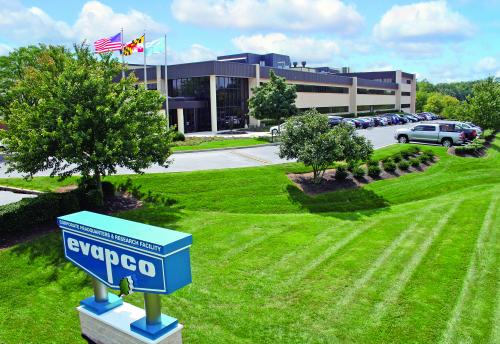
Evapco Headquarters, Taneytown, Maryland.
EVAPCO provides a full spectrum of global product solutions for the commercial HVAC, industrial refrigeration, power generation and industrial process markets with 78 active patents on the market today. Headquartered in Taneytown, MD, the company’s products are engineered and manufactured in 25 locations in 10 countries and supplied through a sales network of more than 170 offices. For more information, visit https://www.evapco.com.
To read articles about Cooling Tower Technology, visit https://coolingbestpractices.com/technology/cooling-towers.
For expert presentations, visit our Webinar Archive Section Cooling Tower Technology at https://coolingbestpractices.com/magazine/webinars.