
Refrigeration Compressors
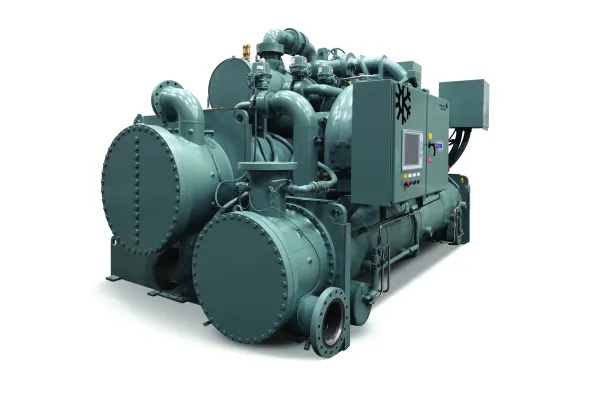
Heavy industrial processes demand robust cooling systems capable of handling extreme temperatures and continuous loads. This article explores how modern centrifugal chillers, variable speed drives (VSDs), heat pumps and smart controls are transforming process cooling performance. By moving beyond traditional oversized designs and focusing on real-world operating conditions, facilities can improve efficiency, reduce operating costs and enhance reliability. The integration of waste heat recovery and digital monitoring further enables plants to optimize energy use, extend equipment life and achieve measurable gains in operational performance.
Oil-free refrigeration compressor technology offers significant benefits in terms of efficiency and performance. Eliminating oil from the system can yield up to 40% improvement in part-load efficiency compared to fixed speed screw compressors. And, this performance improvement can be sustained over the life of the compressor since oil-free compressors incur no mechanical wear during operation.
[ Read Full Story ]
In recent years, the HVAC industry has enlarged its vision from focusing on equipment efficiency measured in terms of ratings points at specific conditions to include a whole building perspective that uses models of year-long, real-world conditions. Accordingly, energy standards have adopted new rating methods to evaluate equipment efficiency during part-load operation. In Part 1 of this two-part article series we examined how these standards are evolving.
[ Read Full Story ]
This first article will examine the evolution of equipment-efficiency standards from full to part load and their relationship to whole-building efficiency. The second article will look at how HVAC technologies are advancing to modulate capacity to match variations in building loads, a major factor in improving whole-building energy performance.
[ Read Full Story ]
Xcel Energy is headquartered in Minneapolis, Minnesota, and is the largest electrical energy provider in Colorado. The company recently upgraded its refrigerant monitoring systems at its Chilled Water building in downtown Denver, creating an efficient and reliable method for continuous monitoring of refrigerant used in 16 chillers in different locations – while supporting the need for safety, system performance, and reductions in energy and refrigerant costs.
[ Read Full Story ]
Cooling large buildings typically requires the use of air- or water-cooled chillers that produce chilled water, which then cools the air. About 39% of buildings over 100,000 square feet use chilled-water systems employing various refrigeration compressor designs.
[ Read Full Story ]
Snail mail. Rolodexes. Boomboxes. We’ve given up the familiarity of the past for the promise of the future. But is the same happening in the chiller industry? Is the push for lower global warming potential (GWP) refrigerants changing the industry as we know it? In some ways, yes. But, in the United States in particular, the change may be more gradual than it appears at first glance.
[ Read Full Story ]