
Chillers
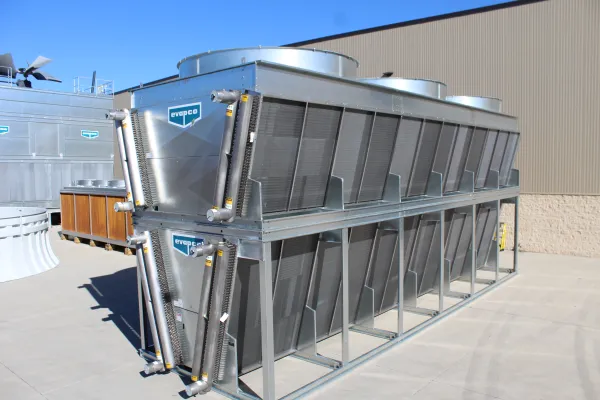
This article will make plants aware of the energy and water use differential between CHW systems providing chilled water in a 45-60°F (7-16°C) range, and process cooling solutions at 70°F up to 120°F (21 to 49°C). The article will examine cooling resource evaluation criteria and supply water temperature specifications, then describe and compare process cooling options.
Johnson Controls’ most recent decarbonization project has gone right to the heart of its 2040 net-zero commitment – working with its own Norman, Oklahoma, manufacturing facility on a chilled water plant and compressed air system upgrade that is projected to nearly halve its greenhouse gas emissions.
[ Read Full Story ]
NPE2024: The Plastics Show took place in Orlando, Florida, May 2024, and Chiller & Cooling Best Practices Magazine and Compressed Air Best Practices® Magazine and were there to cover the highlights. This year’s conference drew over 50,000 registrants, including 15,000 from outside the United States. Filling both buildings of the Orlando Convention Center, the conference included zones dedicated to bottling, recycling and sustainability, material science, advanced manufacturing, mold-making and packaging.
[ Read Full Story ]
In Spring 2024, Chiller & Cooling Best Practices Magazine interviewed Chuck Honeycutt and Brad Davis from Hoffman & Hoffman to discuss best practices in chiller and cooling tower sales and system design. This article will explore how the company has expanded into new areas during its 75-year history. It will also explore a large cooling tower installation at a Colorado biotech.
[ Read Full Story ]
The initial reason the modular concept took hold was a frequent lack of space when it came time to replace a large chiller. Often, these chillers were installed in a confined mechanical room in the basement at the beginning of construction, and the building was then built around it. There was barely enough room to get people to the chiller for maintenance, let alone replacing the chiller itself.
[ Read Full Story ]
Using a combination of predictive analysis and historical information helps companies make sound decisions relating to CUP operations. Ever-changing loads, weather and utility prices combine with hundreds of components that all impact energy efficiency. While previous strategies focused on individualized equipment efficiency and automation, CUP optimization considers the complete system.
[ Read Full Story ]
The U.S. Department of Energy (DOE) started moving down the pump efficiency path when it began regulating certain commercial and industrial pumps in 2020. This effectively removed the least-energy-efficient pumps from the market—about 25 percent of the total. It is a good start, but real change will not be achieved unless we start replacing the installed base with more efficient pumps. The state revolving fund (SRF) programs have a green set-aside of 10 percent of their funds that must be spent on carbon-reduction initiatives. Most facilities have already identified the bad actors—equipment that often breaks down or requires maintenance.
[ Read Full Story ]
In late October 2023, professionals from around the world gathered at the Best Practices 2023 EXPO & Conference at McCormick Place in Chicago, Illinois to source and learn about Sustainble, Safe and Reliable On-Site Utilities Powering Automation including chillers, cooling towers, motors, compressed air, blowers, vacuum, pneumatics and more.
[ Read Full Story ]
This article will discuss the instrumentation typically found in cooling systems and other plant utility systems, what other instruments and gauges should be used, how the instrumentation should be used, and good maintenance practices for instrumentation.
[ Read Full Story ]
The 2023 AHR Expo co-sponsored by ASHRAE and AHRI was held Feb. 6-9 at the Georgia World Congress Center in Atlanta, GA. A total of 1,779 exhibitors (425 international) spread across 487,000 square feet, and several dozen free educational sessions drew 42,794 total attendees. HVACR equipment manufacturers and suppliers displayed their latest innovations engineered to address the megatrends in the HVACR industry and market. This report will highlight the cooling tower, chiller/heat pump and associated technology innovation centered around electrification, decarbonization and water conservation.
[ Read Full Story ]
An Illinois food service products manufacturer now saves nearly 60% of their base annual cooling energy costs through improvements made in three phases over several years. The plant, which has a 1200 ton chilled water plant, implemented upgrades including pump and tower fan VFDs and enhanced function controls, free cooling, and chiller compressor drive retrofits. The revisions built through successive phases to capture further benefits from more complete utilization of the preceding steps’ capabilities.
[ Read Full Story ]