
Technology
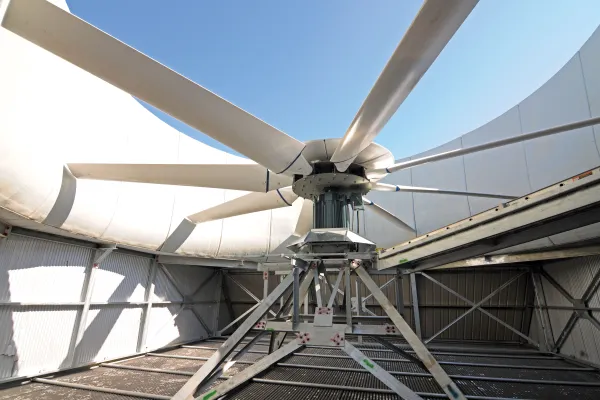
Across industries, operators are adopting cooling tower direct drive (CTDD) motor technology. In particular, permanent magnet (PM) direct drive motors are delivering measurable improvements in efficiency, cleanliness and maintenance reduction. The change is more than a component swap; it represents a new approach to cooling tower design that reduces operating costs, supports environmental goals and improves reliability.
The use of an industrial inhibited glycol and water mixture is recommended in most water chiller systems. Ethylene and Propylene are the two standard types of inhibited glycols commonly used. The main job of glycol is to prevent freezing of the process fluid and ensure consistent flow at the operating temperature. Inhibited glycols will also prevent formation of scale and corrosion while protecting metals such as brass, copper, steel, cast iron and aluminum. Water systems treated with an inhibited glycol will also be protected from algae and bacteria that can grow and degrade the fluid system performance. This brief provides ten basic tips for glycol users in water chilling operations.
[ Read Full Story ]
Air compressors are very effective heaters. Over eighty percent of the energy input from the motor is converted into compression heat. That heat must be rejected from the compressor package in a way that maintains a variety of temperatures in a reliable manner. The laws of physics demand that the air temperatures go up with compression.
[ Read Full Story ]
Pepco Energy Services’ (PES) Midtown Thermal Control Center (MTCC) in Atlantic City, New Jersey, sells chilled water and steam to multiple Atlantic City casinos, Boardwalk Hall and Pier Shops. PES is also responsible for stand-alone remote heating and cooling plants for the Atlantic City’s major casino’s as well as the Atlantic City Convention Center including its 2.4 Mw solar array.
[ Read Full Story ]
Process cooling system applications experiencing constant production loads generating high process fluid temperatures are particularly good candidates to take advantage of low ambient temperatures. Low ambient temperatures can be used as a “free” energy source, replacing the electricity required to run refrigeration compressors, in what is known as a free-cooling chiller system.
[ Read Full Story ]
When the topic of discussion is making ice cream, the first thing that comes to mind isn’t heat, but at Nestlé’s Ice Cream factory in Tulare, California, heat is recovered from air-cooled air compressors to heat process water.
“Right out of the gate, everything is pneumatic,” explains Tom Finn, Project Engineer with Nestlé Ice Cream Division. “Air cylinders and air driven motors, the process piping valves which divert, route, stop/start, and mix process fluids, our packaging machinery including rejection, cleaning and vapor removal processes, all of these rely on compressed air.
[ Read Full Story ]
As the population continues to grow in the United States, industrial water use will need to continue to fall to help offset the increases in public-supply water use. Water-cooled compressed air systems provide an opportunity for sustainability managers to reduce associated cooling water consumption and costs. If switching to air-cooled air compressors is not possible, understanding the costs and the alternative types of liquid cooling systems is important.
[ Read Full Story ]
There are several pieces of information that your cooling system specialist will need in order to properly engineer and build a cooling system for your new air compressor. There are many types of air compressors and each has different requirements of the cooling system in order to operate correctly. This article will take the mystery out of some of the terms and specifications for your cooling system.
[ Read Full Story ]
The rise in energy prices is an unwelcome reality in today’s manufacturing and business environment. And while the rate of price increases for natural gas, heating oil and electricity may vary from year to year, the upward trajectory is clear. Energy cost reduction strategies are vital to staying competitive. Compressed Air Best Practices® Magazine recently discussed heat recovery, from industrial compressed air systems, with the Compressed Air and Gas Institute’s (CAGI) Technical Director, Rick Stasyshan and with CAGI member – Werner Rauer of Kaeser Compressor. Their inputs should provide you with some insight in energy-saving technology.
[ Read Full Story ]
When compressed air is generated, heat is inevitably produced as a by-product. Anyone looking to enhance efficiency can use this heat and increase the efficiency of compressors to about 95 percent as a result. To achieve this, there are easy-fit heat exchangers which can be fitted to existing air compressor stations. This investment often pays for itself within less than a year.
[ Read Full Story ]
There are six basic types of cooling systems that you can choose from to meet the cooling needs of your load. Each one has its strengths and weaknesses. This article was written to identify the different types of cooling systems and identify their strengths and weaknesses so that you can make an informed choice based on your needs.
[ Read Full Story ]