
Technology
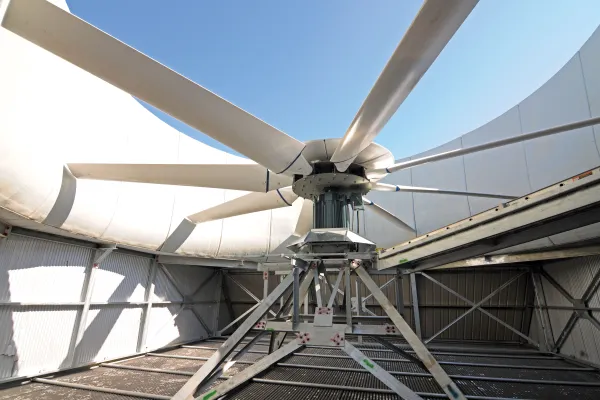
Across industries, operators are adopting cooling tower direct drive (CTDD) motor technology. In particular, permanent magnet (PM) direct drive motors are delivering measurable improvements in efficiency, cleanliness and maintenance reduction. The change is more than a component swap; it represents a new approach to cooling tower design that reduces operating costs, supports environmental goals and improves reliability.
Anecdotal reports from users of Tower Tech cooling towers across the U.S. have indicated the Tower Tech design provides substantial savings to the customer both in terms of lower chemical treatment requirements and substantial water savings. There are a number of mechanisms by which the Tower Tech design facilitates efficient, lower cost water treatment and usage. A few are described in this article.
[ Read Full Story ]
Plastics processors are looking to advanced process cooling equipment to lower operational costs, and in many cases, improve the quality of products and achieve sustainability goals. But it’s more than just a matter of finding a better mousetrap and putting systems to work. Instead, it requires a keen understanding of the processes involved, followed by the design and installation of advanced technology in combination with the right process cooling systems matched to a company’s goals.
[ Read Full Story ]
Physics teaches us that water, when evaporating in an adiabatic system, removes sensible heat from such system. The temperature thus decreases. In order for the water to evaporate, energy is required, specifically 2501 kilojoules for each kilogram of evaporated water. In the absence of an external energy source, the water absorbs the required energy from the environment, in this case from the surrounding air. As a consequence, the air is cooled. In simple terms, it can be stated that evaporation of water converts the sensible heat of the air (temperature) into latent heat (humidity). As a result, the system is cooled and humidified at the same time. This type of cooling is referred to in literature as evaporative cooling or adiabatic cooling.
[ Read Full Story ]
Intelligent process cooling describes an approach to cooling in beverage production and packaging that moves beyond evaporative cooling towers and the use of traditional central chiller systems that rely on ammonia as a refrigerant. Unlike traditional methods, it intelligently matches process cooling systems to individual cooling loads without an evaporative process or the use of ammonia to gain verifiably better results in energy efficiency, water use, and safety.
[ Read Full Story ]
Chrysler’s Technology Center (CTC), located in Auburn Hills, MI, is home to some fourteen thousand employees responsible for keeping the automotive giant in motion. Completed in 1991, the complex is essentially a small city, encompassing 5.3 million square feet situated on over 500 acres. In addition to corporate offices, the facility houses a full laboratory level of various wind tunnels with thermal testing capabilities, a 1.8-mile evaluation road, a noise/vibration facility, an electromagnetic compatibility center, an environmental test center (able to create rain, snow and extreme temperatures), and a pilot production plant.
[ Read Full Story ]
What do the beginnings of innovative businesses have in common? Certainly abstract attributes like creativity, intelligence and dedication all play a part, but in many cases the origins of great businesses have another, more concrete thing in common — a garage. Amazon, for instance, was originally founded by Jeff Bezos in his garage. Walt and Roy Disney made some of their first animated films in their uncle’s garage. And, last but not least, Steve Jobs, Steve Wozniak and Ronald Wayne designed the first Apple computer in a garage.
[ Read Full Story ]
It’s been more than a decade since oil-free magnetic bearing centrifugal compressors hit the HVAC market. With unheard-of part-load energy efficiency and zero oil-related maintenance, these ultra-quiet machines are totally sustainable because there is no oil to change the heat transfer rates in the heat exchangers. Now there are more than 35,000 of them out there logging over 55 million run-hours, and all of them have an initial cost premium.
[ Read Full Story ]
Ultrasonic leak detection has been used for a variety of applications ranging from energy reduction by locating compressed air leaks to quality assurance inspections such as locating wind noise and water leaks in automobiles. The secret to success is to understand the nature of what type of leak produces a detectible ultrasound and what does not, along with the techniques that can be used for effective leak identification. Once understood, there are instances where the limits of detection can be enhanced to help locate a leak in difficult situations.
[ Read Full Story ]
This major mill complex upgraded their compressed air system and thereby eliminated $500,000 in annual rental compressor costs, reduced annual cooling-water costs by $500,000, and reduced electrical energy costs by $135,000 per year.
[ Read Full Story ]
Air compressors are very effective heaters. Over eighty percent of the energy input from the motor is converted into compression heat. That heat must be rejected from the compressor package in a way that maintains a variety of temperatures in a reliable manner. The laws of physics demand that the air temperatures go up with compression.
[ Read Full Story ]