
Industries
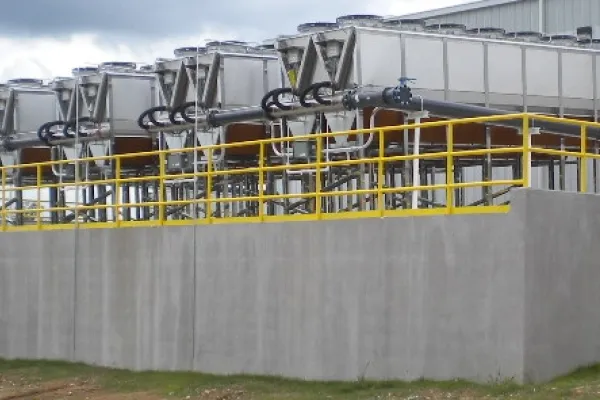
Adiabatic coolers are rapidly gaining ground in plastics processing as manufacturers seek sustainable, energy-efficient alternatives to traditional cooling towers. By operating in dry, adiabatic and free-cooling modes, modern systems engineered by Frigel North America deliver up to 90% water savings, lower energy consumption and improved temperature stability for injection molding, PET, extrusion and thermoforming applications. With reduced maintenance, closed-loop protection and long-term ROI advantages, adiabatic cooling is emerging as the new benchmark for high-performance industrial process cooling.
The CHS oil refinery in McPherson, KS, is a 550-acre facility that processes 100,000 barrels of crude oil per day, consisting of an even mix of sweet crude oil and sour crude oil. Crude is brought in through pipelines and fractionated into gasoline, diesel and a few other products. The refinery also houses a sulfur plant where it produces a liquid agricultural fertilizer called ATS or ammonium thiosulfate, which uses sulfur removed primarily through a process called hydrotreating.
[ Read Full Story ]
Faced with the requirement for improved cooling, a blow molding plant chose to invest in a significant redesign of its cooling systems that combined two separate systems into a single, integrated system. The combined design leveraged the components to provide a more controlled, efficient system while also requiring less space than the alternative would have needed.
[ Read Full Story ]
Faced with the requirement for improved cooling, a blow molding plant chose to invest in a significant redesign of its cooling systems that combined two separate systems into a single, integrated system. The combined design leveraged the components to provide a more controlled, efficient system while also requiring less space than the alternative would have needed.
[ Read Full Story ]
The firm corrected issues with how its customer treated and recirculated its cooled water, adding chemical treatment equipment the plant could use in the future. Treating water is an important parts of maintaining a healthy cooling system. During the firm’s initial evaluation, it was evident the existing equipment had seen the effects of a lack of water treatment while the production line was not in use.
[ Read Full Story ]
Bayer Crop Science runs a 240-acre fertilizer production facility with areas for active ingredient and chemical intermediate production, as well as a high-active herbicide production unit. Among the multiple cooling towers at the facility was a 40-year-old field-erected, three-cell, wooden, crossflow Marley cooling tower used for rejecting heat and providing cooling for multiple processes.
[ Read Full Story ]
NPE2024: The Plastics Show took place in Orlando, Florida, May 2024, and Chiller & Cooling Best Practices Magazine and Compressed Air Best Practices® Magazine and were there to cover the highlights. This year’s conference drew over 50,000 registrants, including 15,000 from outside the United States. Filling both buildings of the Orlando Convention Center, the conference included zones dedicated to bottling, recycling and sustainability, material science, advanced manufacturing, mold-making and packaging.
[ Read Full Story ]
How do you replace aging cooling towers without risking disruption to a plant's continuous high-volume operation? That was the challenge at a major Midwest automotive manufacturing facility. In 1998, SUVs and minivans began rolling off the production line at the 4.5 million-square-foot facility (roughly 80 football fields under one roof), and the existing cooling towers were due to be replaced.
[ Read Full Story ]
FABTECH 2023, a leading event for metal forming, fabricating, welding, and finishing, successfully wrapped up its four-day run at Chicago's McCormick Place, achieving significant milestones for attendance, exhibitors, and show floor size. The 2023 show floor, spanning an impressive 825,325 square feet across three exhibit halls, featured an extensive showcase of over 1,500 world-class suppliers.
[ Read Full Story ]
The Sterling Heights facility, producing jet engines for the U.S. Army, has undergone extensive overhauls and re-tooling in the last decade. In 2010, Stellantis announced it would invest nearly $850 million in a new state-of-the-art paint shop at the SHAP Site, as well as the installation of new machinery, tooling and material-handling equipment. The following year, the company added another $165 million to the investment to build a one million-square-foot body shop.
[ Read Full Story ]
An Illinois food service products manufacturer now saves nearly 60% of their base annual cooling energy costs through improvements made in three phases over several years. The plant, which has a 1200 ton chilled water plant, implemented upgrades including pump and tower fan VFDs and enhanced function controls, free cooling, and chiller compressor drive retrofits. The revisions built through successive phases to capture further benefits from more complete utilization of the preceding steps’ capabilities.
[ Read Full Story ]