
Industries
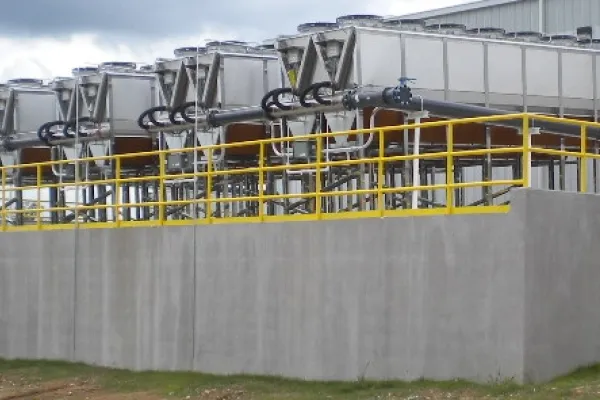
Adiabatic coolers are rapidly gaining ground in plastics processing as manufacturers seek sustainable, energy-efficient alternatives to traditional cooling towers. By operating in dry, adiabatic and free-cooling modes, modern systems engineered by Frigel North America deliver up to 90% water savings, lower energy consumption and improved temperature stability for injection molding, PET, extrusion and thermoforming applications. With reduced maintenance, closed-loop protection and long-term ROI advantages, adiabatic cooling is emerging as the new benchmark for high-performance industrial process cooling.
Opened in fall 2018, the new $19.3 million school building spans 65,837 square feet with a capacity to serve 500 students. The building serves students of pre-school age through Grade Five and is also designed to host groups of various sizes during summer months. It also serves as the campus gateway to the adjacent Elkton Public Library and the Elkton Middle and High Schools.
[ Read Full Story ]
Chiller & Cooling Best Practices Magazine spoke with Tom Pagliuco, Executive Director Global Energy Engineering at AbbVie, Inc. about best practices for optimizing chilled water systems in today’s pharmaceutical operations.
[ Read Full Story ]
Chiller & Cooling Best Practices Magazine spoke with Tom Pagliuco, Executive Director Global Energy Engineering at AbbVie, Inc. about best practices for optimizing chilled water systems in today’s pharmaceutical operations.
[ Read Full Story ]
Schoeneck Containers, Inc. (SCI) is a company that thinks a lot about its future – and how to continue to maintain a long track record of profitability and reliability while meeting a growing demand for its quality plastic containers for customers throughout North America. It’s the kind of thinking driving the decision to install a closed-loop adiabatic fluid cooler and central chiller with free-cooling capabilities at the company’s new 250,000-square-foot production facility in Delavan, Wisconsin.
[ Read Full Story ]
Industrial automation and process applications requiring a chiller or heat exchanger can come in all types of shapes and sizes, and cooling capacity demands can range from a few hundred Btu/hr. for bench top lab equipment to many million Btu/hr. for laser applications. Chiller sizing for large-scale end users such as beverage, chemical or plastics manufacturing usually will demand central systems to achieve the massive cooling capacity requirements compared with small- to medium-range point of use automation applications. These unique differences become more challenging for original equipment manufacturers (OEMs) as machine designers must anticipate a wide range of end-user operating environments and operator skill levels when specifying chillers or heat exchangers in contrast to end-user facilities where cooling capacity requirements are location specific and operator skill levels are known.
[ Read Full Story ]
Recent legislation is impacting the use of hydrofluorocarbon (HFC) refrigerants, both globally and nationally. On the heels of these changes is confusion about legislation and the availability of certain types of refrigerants. On a global scale, the Kigali Amendment to the Montreal Protocol provides a global phase-down schedule for the use of HFC refrigerants in multiple sectors - including R-134a and R-410A - for the HVAC/R industry. While ratified across the globe by approximately 100 countries to date, the amendment has yet to be ratified in the United States.
[ Read Full Story ]
“Evaporative cooling capacity for the district system is provided by a six-cell, open-loop cooling tower capable of 6,000 tons,” said Reid Olsen, USU Central Energy Plant Manager, who has been at the university for 26 years. “This tower serves the condensers of the water-cooled chillers at the heart of the district cooling system. There are four chillers in all, two of which are rated for 1,800 tons each, and the other two are 900 tons apiece. The cooling towers reject heat from the condenser water loop via evaporative cooling, allowing the chillers to supply chilled water to the campus cooling loop.”
[ Read Full Story ]
At the company’s production plant employees manufacture a complete range of engineered, high-performance polymers. At the heart of the operation are numerous extrusion lines and related equipment that operate 24 hours a day, five days per week to produce and ship as much as five million pounds of high-performance polymer pellets each month. The process of producing pellets begins when the rotating screw on each extruder accepts a carefully calibrated mix of thermoplastic materials, as well as additives, from a hopper and pushes the mixture into the extruder’s barrel.
[ Read Full Story ]
In recent years, the HVAC industry has enlarged its vision from focusing on equipment efficiency measured in terms of ratings points at specific conditions to include a whole building perspective that uses models of year-long, real-world conditions. Accordingly, energy standards have adopted new rating methods to evaluate equipment efficiency during part-load operation. In Part 1 of this two-part article series we examined how these standards are evolving.
[ Read Full Story ]
Among key initiatives at DENSO’s Maryville, Tennessee, facility is the use of an innovative ice-storage system engineered to provide environmentally friendly comfort cooling to employees at the company’s main production facility. The system also allows Plant 101 to reduce cooling costs per ton by 44%, while providing a payback of less than four years. It also resulted in an annual carbon dioxide (CO2) reduction of 18,000 tons.
[ Read Full Story ]