
Industries
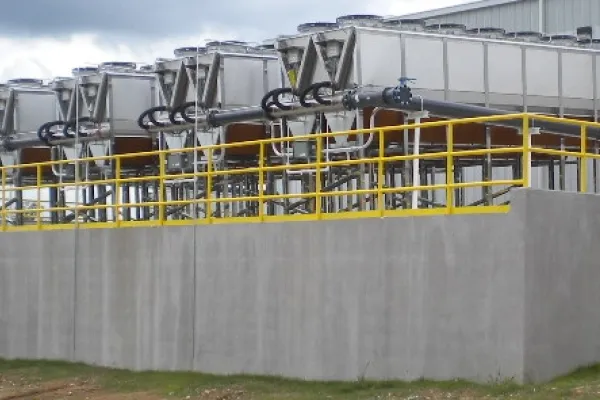
Adiabatic coolers are rapidly gaining ground in plastics processing as manufacturers seek sustainable, energy-efficient alternatives to traditional cooling towers. By operating in dry, adiabatic and free-cooling modes, modern systems engineered by Frigel North America deliver up to 90% water savings, lower energy consumption and improved temperature stability for injection molding, PET, extrusion and thermoforming applications. With reduced maintenance, closed-loop protection and long-term ROI advantages, adiabatic cooling is emerging as the new benchmark for high-performance industrial process cooling.
When a cooling tower supporting the HVAC system at NYC Health + Hospitals/Lincoln was nearing its expected end of life, the management of the 362-bed hospital in the South Bronx saw an opportunity. The year before, the neighboring community had experienced outbreaks of Legionnaires’ disease, and even though the hospital’s cooling towers played no role in those outbreaks, the chance to increase protections against possible future exposures of the bacteria that cause the disease was an important consideration.
[ Read Full Story ]
Cooling large buildings typically requires the use of air- or water-cooled chillers that produce chilled water, which then cools the air. About 39% of buildings over 100,000 square feet use chilled-water systems employing various refrigeration compressor designs.
[ Read Full Story ]
Snail mail. Rolodexes. Boomboxes. We’ve given up the familiarity of the past for the promise of the future. But is the same happening in the chiller industry? Is the push for lower global warming potential (GWP) refrigerants changing the industry as we know it? In some ways, yes. But, in the United States in particular, the change may be more gradual than it appears at first glance.
[ Read Full Story ]
One of the biggest challenges brewers such as Coppertail face is maintaining the dedication to their brand’s mission and their loyal following, while expanding their reach and growing market share. That challenge means not compromising on ingredients and utilizing the best equipment available for the fermenting, brightening and packaging of their product. But, for any growing business, reliability, uptime and power costs must be quantified in order to maximize margins to make the business viable.
[ Read Full Story ]
The craft brewing industry has exploded over the past several years. According to the Brewers Association, in 2012 there were 2,420 regional craft breweries, microbreweries and brewpubs in the U.S. By 2017 that number had nearly tripled to 6,266. The abundance of craft brewers has led to increased competition for market share among consumers, distributors and bars – leaving little to no room for error in the brewing process.
[ Read Full Story ]
Understanding and emulating how an existing business achieved success is often one of the biggest advantages to new business start-ups. Dogfish Head Craft Brewery, one of the first large craft breweries in the United States, has become recognized as a leader in this burgeoning industry. New breweries look to Dogfish Head’s model for implementing ideas that work without experiencing the irksome (and often expensive) trial and error growing pains.
[ Read Full Story ]
Penn State Health Milton S. Hershey Medical Center, Hershey Pa., is all about energy and resource efficiencies, which is why it adopted a new approach to managing its chilled water operation. The approach, which revolves around a software and analytics platform used to optimize three chiller plants in addition to various equipment upgrades, has allowed it to save 4.16 GWh/yr in electrical energy consumption – and shave $300,000 off of its annual electrical costs. With an incentive from the local utility of $415,799, the multi-phased initiative achieved a payback of 4.3 years.
[ Read Full Story ]
Given that HVAC systems typically account for 44% of commercial buildings’ energy consumption1, HVAC optimization should be a priority efficiency upgrade after lighting improvements and other low-hanging fruit. Full-scale HVAC optimization typically reduces energy usage and costs by 20 to 40%, improves system reliability by operating equipment more efficiently and at optimal temperatures, ensures consistently healthy air quality and building comfort, and reduces a building’s carbon footprint.
[ Read Full Story ]
The NPE 2018 International Plastics Showcase was held at the Orange County Convention Center in Orlando, Florida, May 7-11. Setting all-time records, the Show attracted 2,180 exhibitors — including Chiller & Cooling Best Practices and Compressed Air Best Practices® Magazines! Over 1,200,000 square feet of exhibition space was used, breaking the all-time NPE record. Held once every three years, NPE 2018 registered attendance was 56,000.
[ Read Full Story ]
Since 2002, Energy Trust of Oregon have saved and generated 728 average megawatts of electricity and 52 million annual therms of natural gas. This is enough energy to power Multnomah and Washington counties while heating Deschutes County homes. ETO has saved enough energy equal to the output of a power plant and reduced reliance on fossil fuels. In total, they have invested $1.5 billion to save customers more than $6.9 billion on their energy bills over time.
[ Read Full Story ]