
Industries
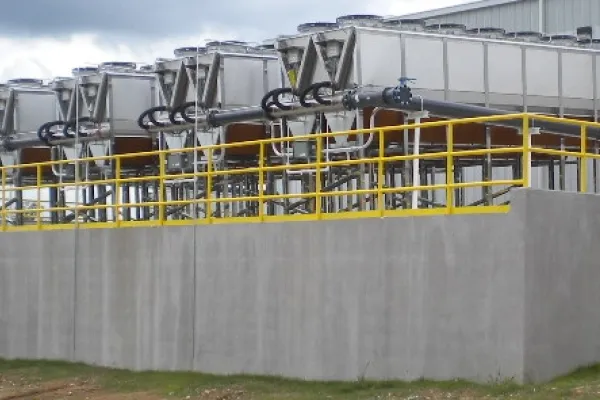
Adiabatic coolers are rapidly gaining ground in plastics processing as manufacturers seek sustainable, energy-efficient alternatives to traditional cooling towers. By operating in dry, adiabatic and free-cooling modes, modern systems engineered by Frigel North America deliver up to 90% water savings, lower energy consumption and improved temperature stability for injection molding, PET, extrusion and thermoforming applications. With reduced maintenance, closed-loop protection and long-term ROI advantages, adiabatic cooling is emerging as the new benchmark for high-performance industrial process cooling.
A common misconception in plastics injection molding is that coolant temperature is the one true path to achieve productivity and profitability. The reality, however, is that turbulent flow is the primary force behind efficient cooling and a key driver in the ability to achieve operational efficiencies, increase profits and consistently produce high quality products.
[ Read Full Story ]
The ComEd® Energy Efficiency Program offers incentives to help facilities save money by improving the efficiency of their equipment. Industries can receive standard cash incentives for common energy efficiency improvements or custom cash incentives for making improvements not included in the standard program.
[ Read Full Story ]
An airside economizer is typically used on a packaged rooftop or tied to an indoor AHU, allowing filtered outside air into the space when outdoor temperatures drop below 55°F (12 °C) (the common supply air temperature of indoor spaces) thus alleviating the need for the refrigeration cycle to be running. Interior space is being cooled yet the refrigeration system is not running, hence the name Free Cooling.
[ Read Full Story ]
Commercial buildings in the United States will be looking to replace centrifugal chillers as many are near or past their median replacement life of 25 years. This becomes apparent when you consider nearly half of all commercial buildings were constructed before 1980 according to data from the U.S. Energy Information Administration. The same can be said of buildings on American college campuses, which according to the same data, more than half of which were built before 1990. Bottom line — if you’re a commercial building owner or a facility manager/director in the United States, you may need to replace a chiller.
[ Read Full Story ]
One of the most important steps in the mold making process is a consistent and proper cooling cycle. This is due to the fact cooling rates can have a significant influence on the overall quality of the finished item. The cooling cycle must remain consistent throughout the entire production run to ensure all items are equal in quality.
[ Read Full Story ]
The Institute for Bioscience and Biotechnology Research (IBBR) connects scientists from the University of Maryland, the National Institute of Standards and Technology, and industry to find solutions to major scientific and medical challenges. With one of the nation’s largest collections of high-resolution instruments, they look inside cells and manipulate molecules. IBBR researchers have figured out the molecular structure of proteins, unraveled the protein interactions involved in autoimmune disorders and discovered possible countermeasures for antibiotic resistance.
[ Read Full Story ]
Industrial cooling and refrigeration equipment used in manufacturing and environmental control rely heavily on water to either cool, or otherwise regulate product or formulation temperature during processing. While such equipment can appear to function efficiently without input of truly pure water, the unknown cumulative build-up of scale and corrosion would be costly due to high maintenance, related damage, reduced efficiency, and ultimately, premature equipment failure.
[ Read Full Story ]
This article contains pieces from an audit report developed for a fish processing plant located in Yangon, Myanmar. It is located in the Thinbawgin Ward of Dawbon Township in Yangon, Myanmar. The objective is to show factories the information they may want to have gathered on their refrigeration systems and supporting cooling systems.
[ Read Full Story ]
Chiller & Cooling Best Practices Magazine interviewed Paul Heston (General Manager) and Tom Strock (Chief Engineer) from Hydrothrift Corporation.
In a nutshell, where workers are exposed to harmful chemicals, they must have eyewash and safety shower stations to decontaminate themselves in the event of a spill or splash. A variety of industries, including petrochemical, chemical, metal fabrication and laboratories, must plan for this contingency. The ANSI Z358.1 Standard specifies the water used for these purposes must be tepid or within a site-specified range. This means in colder climates, water must be heated, and in hotter climates water must be cooled.
[ Read Full Story ]
Chiller & Cooling Best Practices Magazine interviewed Paul Heston (General Manager) and Tom Strock (Chief Engineer) from Hydrothrift Corporation.
In a nutshell, where workers are exposed to harmful chemicals, they must have eyewash and safety shower stations to decontaminate themselves in the event of a spill or splash. A variety of industries, including petrochemical, chemical, metal fabrication and laboratories, must plan for this contingency. The ANSI Z358.1 Standard specifies the water used for these purposes must be tepid or within a site-specified range. This means in colder climates, water must be heated, and in hotter climates water must be cooled.
[ Read Full Story ]