
Technology
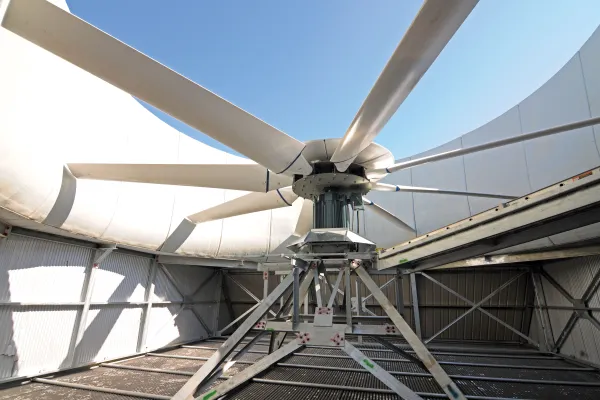
Across industries, operators are adopting cooling tower direct drive (CTDD) motor technology. In particular, permanent magnet (PM) direct drive motors are delivering measurable improvements in efficiency, cleanliness and maintenance reduction. The change is more than a component swap; it represents a new approach to cooling tower design that reduces operating costs, supports environmental goals and improves reliability.
The average chiller lifecycle can be as much as 20 years making maintenance a continuous process requiring a holistic and proactive approach. By integrating smart equipment engineered to simplify maintenance with intelligent automation solutions, chillers can be optimized to drive building performance and help operators overcome common maintenance challenges.
[ Read Full Story ]
The Cordia Minneapolis district energy system has evolved since it first went online in 1972 to include one main plant and nine satellite plants providing heating and cooling to over 100 buildings. Those buildings are some of the biggest in the state, including the homes of three professional sports teams (U.S. Bank Stadium, Target Field and Target Center), the Minneapolis Convention Center, the Minnesota Star Tribune printing plant and Augsburg University. The steam and hot water system includes 39,000 feet of piping. The chilled water system includes 24,900 feet of piping and has a cooling capacity of 37,550 tons.
[ Read Full Story ]
Developing centrifugal refrigeration compressors, whether they have one stage or two, involves considering several factors. From a cost perspective, a single-stage refrigeration compressor is an ideal option. It’s simpler to design and has fewer parts, which generally makes it cheaper. However, single-stage refrigeration compressors have their limitations.
[ Read Full Story ]
The firm corrected issues with how its customer treated and recirculated its cooled water, adding chemical treatment equipment the plant could use in the future. Treating water is an important parts of maintaining a healthy cooling system. During the firm’s initial evaluation, it was evident the existing equipment had seen the effects of a lack of water treatment while the production line was not in use.
[ Read Full Story ]
The 2025 Cooling Technology Institute (CTI) Annual Conference for manufacturers, owner-operators and suppliers of heat rejection equipment was held Feb. 2-5, 2025, at the Peabody Hotel in Memphis, TN. This article shares updates to CTI standards and acceptance test codes, synopsizes the event’s educational curriculum, shares perspective and highlights products and services offered by firms at the event’s trade show.
[ Read Full Story ]
Chiller & Cooling Best Practices sat down with three of CIS’s officers, Mikel Bonano, Jr., CEO; Keith Earhart, Vice President, Engineered Sales and Strategic Accounts and Joseph Bonano, Louisiana Controls Manager; to discuss staying operational during extreme weather events, the benefits of two-stage centrifugal chiller impellers and a massive project CIS undertook for Tulane University.
[ Read Full Story ]
More than 1,800 exhibitors and 350 speakers drew in over 50,000 attendees. HVACR professionals from across the globe gathered to discuss the latest regulation updates and explore innovations. This article focuses on chiller, heat rejection and related cooling technologies for industrial use.
[ Read Full Story ]
The selection criteria for the hybrid fluid cooler considered year-round temperatures. Summer duty had an entering water temperature of 95°F (35°C) and a leaving water temperature of 85°F (29°C). In winter, the wireless provider could use the fluid cooler for direct free cooling, meaning it could send water directly through the fluid cooler, bypassing the chiller. Entering water temperature was 55°F (13°C) and leaving water temperature was 44°F (7°C).
[ Read Full Story ]
If we're using sustainability as a broader term, there's waste management, water, carbon, renewable power and more. Those are some of the units now part of the equation we're solving for. It sometimes ends up with a different set of solutions than you would typically end up with if you were only looking at dollars.
[ Read Full Story ]
Bayer Crop Science runs a 240-acre fertilizer production facility with areas for active ingredient and chemical intermediate production, as well as a high-active herbicide production unit. Among the multiple cooling towers at the facility was a 40-year-old field-erected, three-cell, wooden, crossflow Marley cooling tower used for rejecting heat and providing cooling for multiple processes.
[ Read Full Story ]